
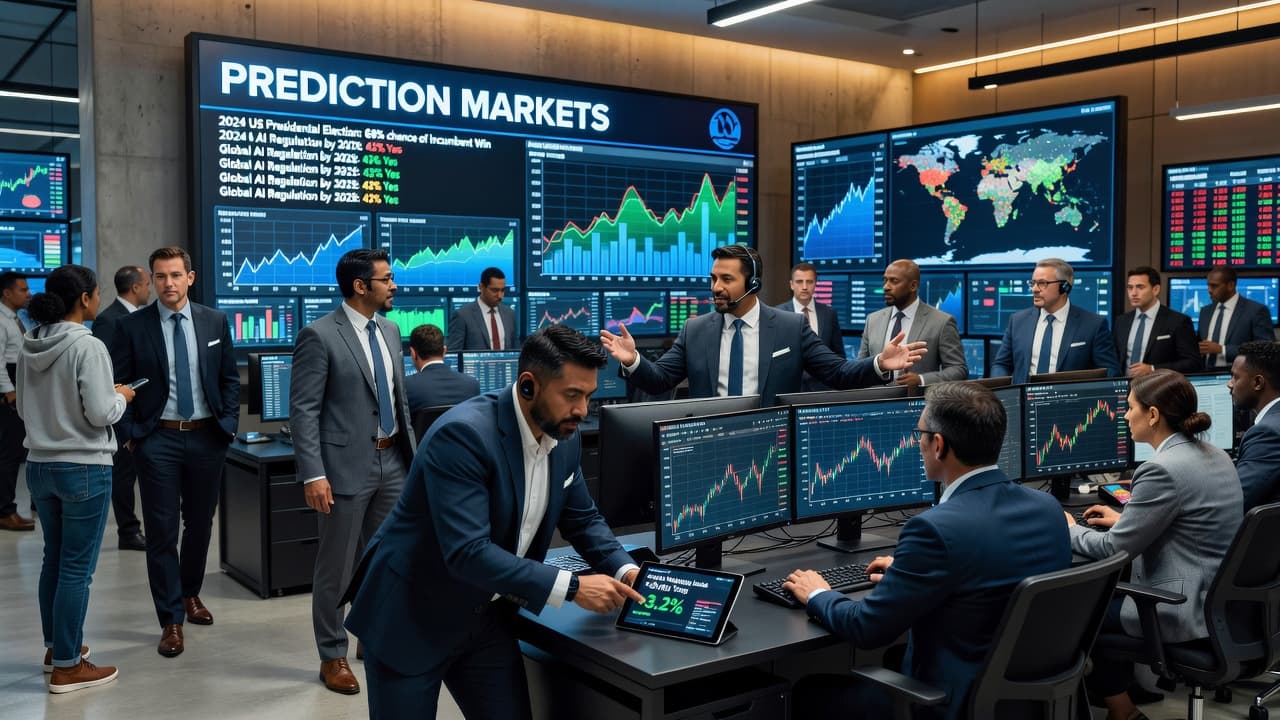
AI prediction markets face a growing trust challenge

- Coinbase Global (NASDAQ:COIN) is investigating an AI-generated notification that incorrectly reported the result of a FIFA World Cup match before kickoff.
- The incident comes as Coinbase expands prediction markets through Kalshi while increasing the use of artificial intelligence across customer-facing products.
- AI accuracy, regulatory oversight and user confidence remain major challenges as prediction markets become more widely adopted.
Coinbase Global (NASDAQ:COIN)
Coinbase is investigating an AI-generated sports notification that falsely claimed Norway had beaten Brazil 3-2 before the match began. The incorrect alert conflicted with Coinbase's own prediction market page, which showed the game as delayed, prompting criticism over the reliability of AI-generated market updates. Chief executive Brian Armstrong responded, "Taking a look with the team – thx for reporting it," while the company has not disclosed the cause or whether automated sports alerts will be paused.
Kalshi (Private Company)
Kalshi provides the regulated prediction market infrastructure behind Coinbase's United States prediction markets. The platform allows users to trade contracts tied to real-world events, with payouts based on verified outcomes rather than cryptocurrency prices. The Coinbase incident highlights the importance of accurate data feeds when prediction markets depend on real-time information.
Polymarket (Private Company)
Polymarket is the largest crypto-native prediction market and settles event contracts on blockchain networks using cryptocurrency. Unlike Coinbase's regulated US partnership model, Polymarket primarily serves international users and relies on decentralised market activity, making reliable event resolution and trusted data sources essential to maintaining user confidence.
Augur (CRYPTO:REP)
Augur pioneered decentralised prediction markets by allowing users to create and settle event contracts through smart contracts. The protocol uses Reputation (CRYPTO:REP) tokens to encourage accurate reporting of outcomes, demonstrating an alternative approach that distributes verification across token holders instead of relying on a central platform.
UMA (CRYPTO:UMA)
UMA provides optimistic oracle technology that helps verify real-world events for decentralised applications. Its oracle system allows disputes when submitted data is challenged, making it part of the infrastructure increasingly used by blockchain-based prediction markets that require accurate settlement data.
The bottom line
Prediction markets continue expanding across both centralised and decentralised platforms, but their credibility depends on accurate information and reliable event verification. As artificial intelligence becomes more integrated into customer-facing products, exchanges and protocol developers face greater pressure to ensure automated systems do not undermine user trust.
![Augur [OLD] logo](https://coin-images.coingecko.com/coins/images/309/small/REPv2_Icon_-_Full_Color_over_Black.png?1776903141)


