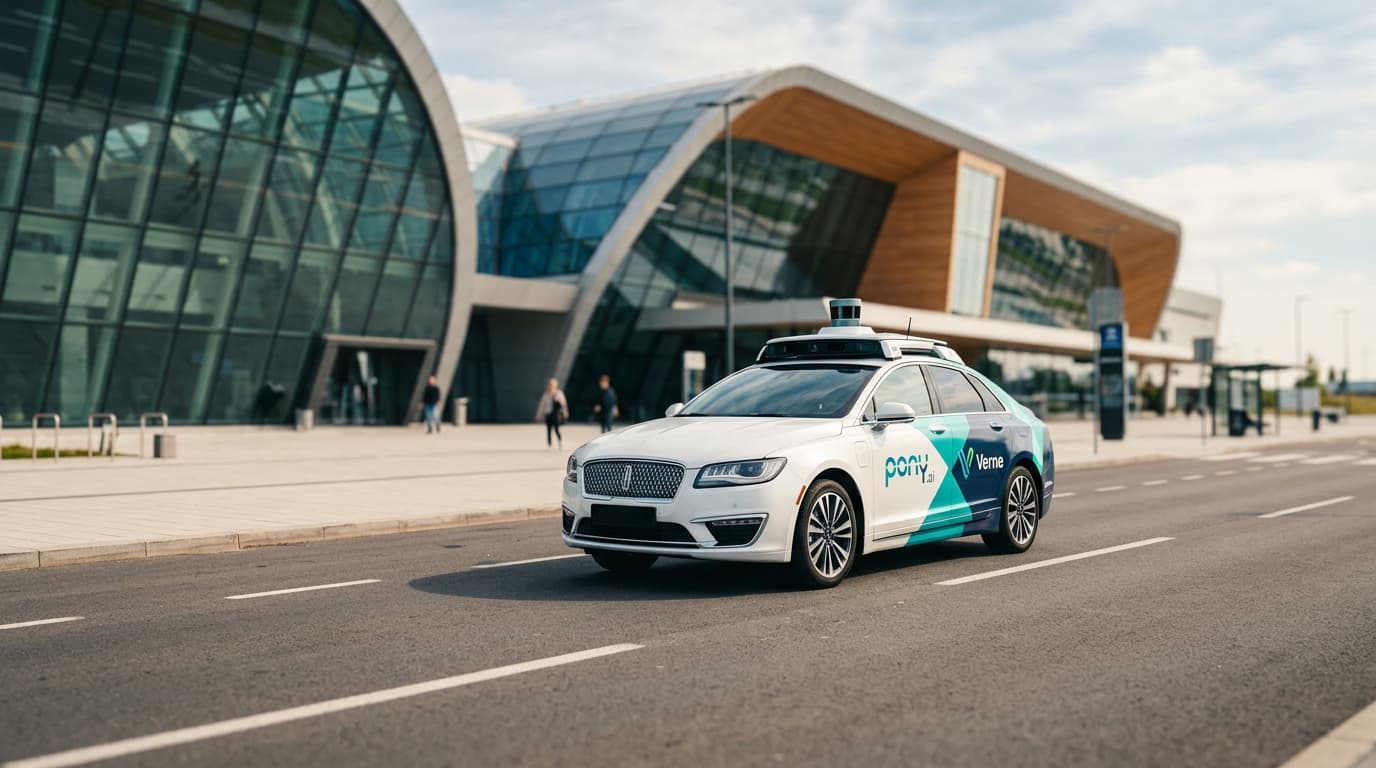
Pony AI revenue rallies 145% as robotaxi demand prompts target hike

Pony AI (NASDAQ:PONY) recorded a 145% surge in first-quarter revenue, fueled by the rapid commercial acceleration of its robotaxi operations, leading the autonomous driving company to raise its full-year vehicle deployment and revenue targets.
The Guangzhou-based developer reported unaudited total revenues of $34.3 million for the three months ended March 31, 2026, up from $14 million in the corresponding prior-year period.
The sharp top-line expansion demonstrates growing commercial traction for autonomous transport solutions, outpacing broader market estimates for the quarter.
Gross profit for the opening quarter arrived at $5.6 million, yielding a consolidated gross margin of 16.2%.
The company's core growth engine was its Robotaxi services segment, where revenue climbed 395.4% year-over-year to $8.6 million.
The segment benefited from a 456.5% spike in direct fare-charging revenue, insulated from standard Q1 transport seasonality by expanded operating zones.
Pony AI’s other divisions also logged steady gains.
Intelligent Solutions revenue, which tracks technology licensing and software applications, increased 246.5% year-over-year to $15.5 million.
Meanwhile, the company’s Robotruck freight division grew 31% to $10.2 million, supported by ongoing logistical partnerships in commercial shipping corridors.
Operationally, Pony AI’s global robotaxi fleet surpassed 1,700 active units during the quarter.
Domestically, the company extended its fully driverless commercial footprints into core urban sub-districts of Guangzhou and Shenzhen.
Internationally, the firm initiated its first European pilot network in Zagreb, Croatia, via a localized logistics integration.
Citing strong month-over-month passenger registration data through May, management raised its full-year outlook for the remainder of 2026.
Pony AI now projects full-year Robotaxi segment revenue to exceed 3.5 times the total recorded in fiscal year 2025, up from its previous guidance of a 3.0-times multiple.
Additionally, the company adjusted its year-end active vehicle deployment target from 3,000 units to more than 3,500 automated vehicles, intending to establish operational footprints across more than 20 cities globally by the close of the year.