
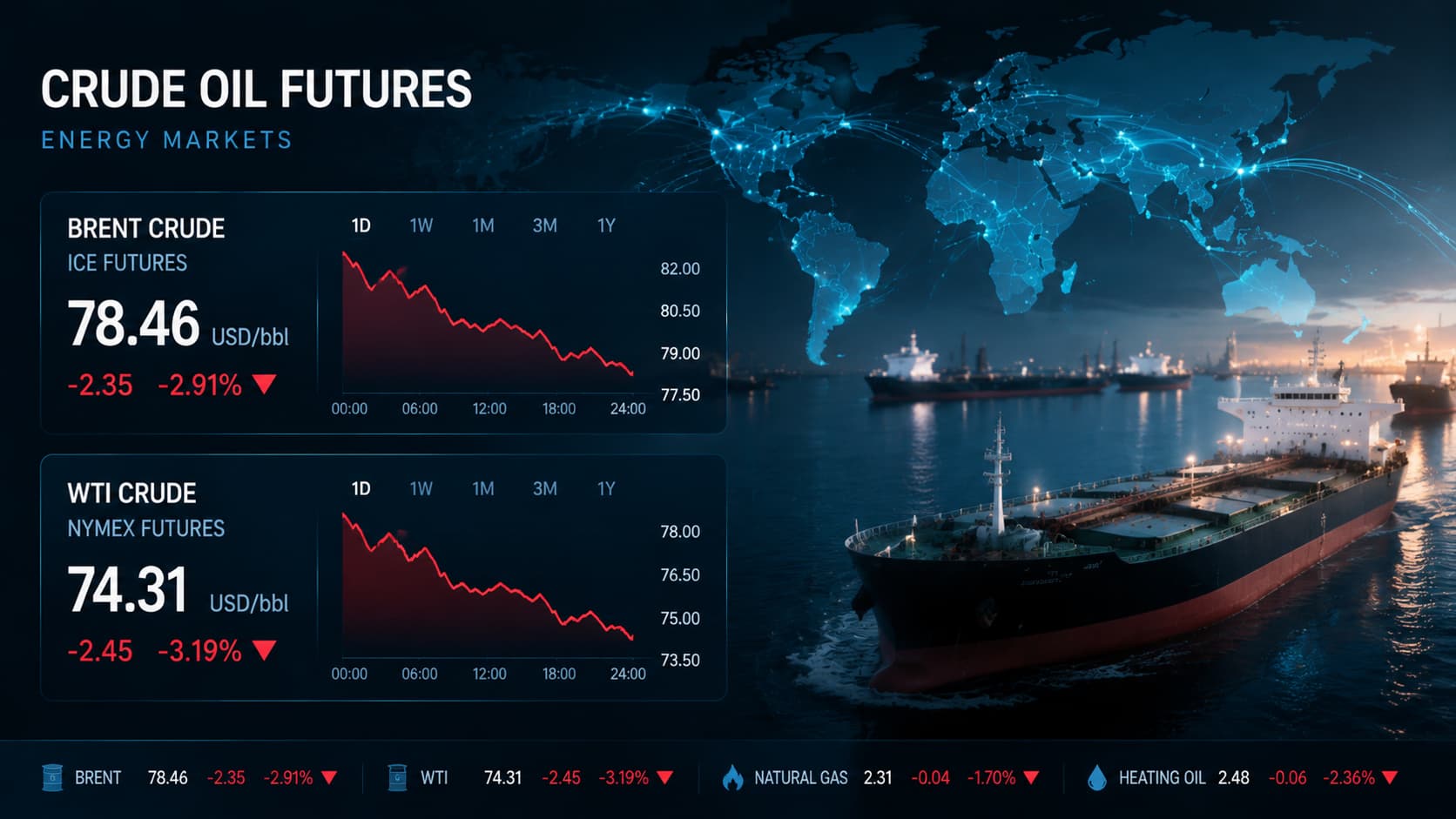
Oil clocks 2% weekly slump as Trump defuses immediate Iran escalation fears

Oil prices fell more than 2% on Friday, extending a downswing from the previous session after U.S. President Donald Trump canceled plans for targeted military strikes against Iran.
The decision rapidly defused investor anxieties regarding a severe military escalation in the Middle East following a series of tit-for-tat attacks between the nations earlier in the week, stripping out a significant portion of the geopolitical risk premium that had locked into the energy complex.
By 0640 GMT, Brent crude futures had retreated by $2.11, or 2.3%, to trade at $88.27 a barrel.
Concurrently, U.S. West Texas Intermediate (WTI) crude dropped $1.90, or 2.2%, to sit at $85.81 a barrel.
The selloff followed remarks from President Trump on Thursday confirming he had called off the planned airstrikes, adding that backchannel diplomatic discussions with Tehran had progressed significantly.
Trump indicated that a preliminary peace deal aimed at reopening the blocked Strait of Hormuz to commercial shipping could be finalized as early as this weekend, though Iranian state officials explicitly noted they had not reached a final decision on the text.
The market's downward correction reflects temporary relief over shipping vulnerabilities, though underlying structural risks persist.
The Strait of Hormuz, which typically facilitates the transit of roughly one-fifth of global oil and liquefied natural gas (LNG) shipments, has been subject to a months-long blockade by Tehran that has kept global energy benchmarks elevated since early 2026.
While Iranian state media reported Friday that its forces had intercepted a tanker attempting to cross the waterway without coordination, the U.S. military confirmed via social media that broader commercial traffic continues to navigate the strait.
The broader market outlook remains balanced between near-term diplomatic optimism and tightening seasonal balances.
Market analysts warned that any extension of a ceasefire remains fragile, noting that if broader nuclear negotiations stall, inventory drawdowns and peak summer demand could drive prices significantly higher toward the $120–$130 range by late July.
Compounding the immediate price pressure, the Organization of the Petroleum Exporting Countries (OPEC) revised its demand estimates down on Thursday, cutting its 2026 global oil demand growth forecast to 970,000 barrels per day (bpd) from 1.17 million bpd, representing its second consecutive downward adjustment.
However, the producer group forecast a subsequent consumption rebound for 2027, raising its demand growth projections for next year by 190,000 bpd to a total expansion of 1.73 million bpd.
