TMC Mesabi royalty project begins production blasting

- The Metals Royalty Company reported the first production blast at the Mesabi Metallics iron ore project in Minnesota.
- The blast fractured approximately 211,000 tons of ore and opened the first mine ramp.
- TMC said the milestone supports progress toward first pellet production and future royalty revenue.
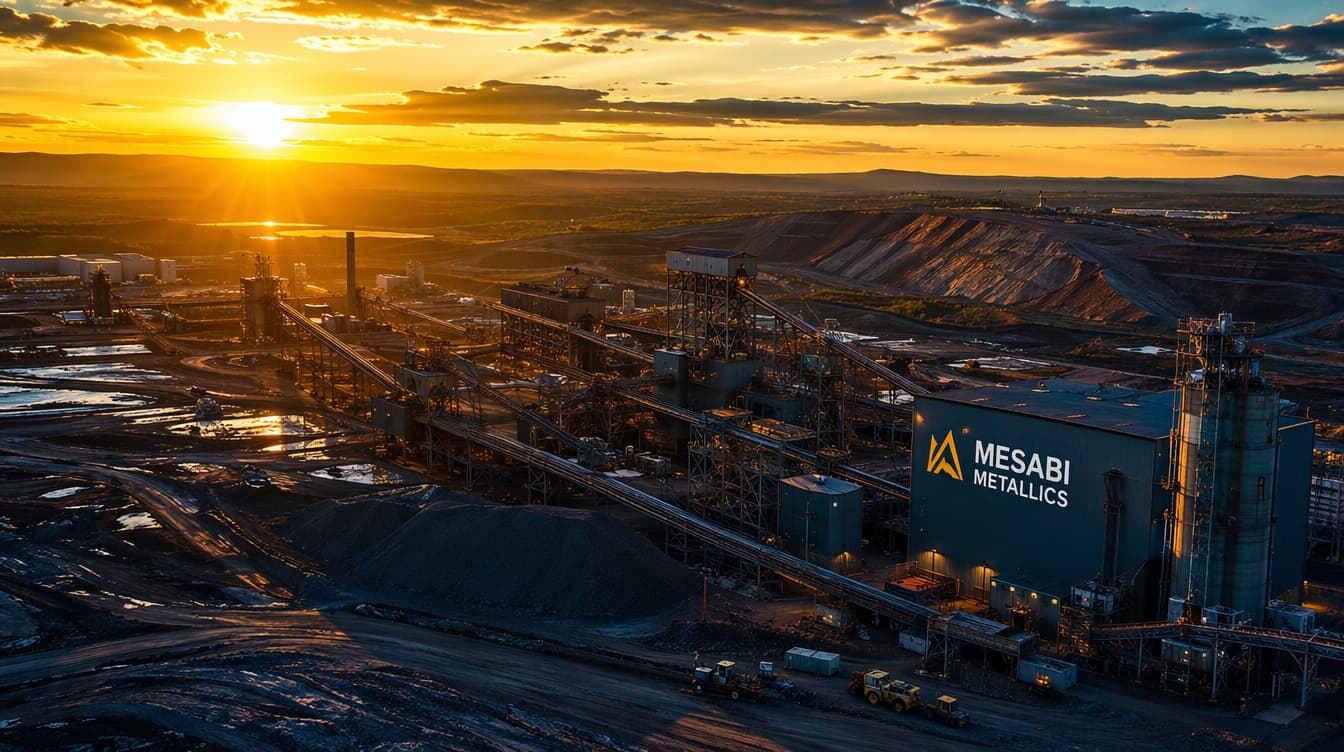
The Metals Royalty Company (NASDAQ:TMC) reported that its Mesabi Metallics iron ore royalty project in Nashwauk, Minnesota completed its first production blast on July 10, 2026, marking a step toward planned pellet production.
The milestone follows Mesabi Metallics’ preparation of mine infrastructure, with the company using a 66-hole blast pattern to fracture approximately 211,000 tons of ore and open the first ramp for 400-ton haul trucks.
Mesabi Metallics plans to conduct weekly blasting as mining advances, with ore expected to be processed into direct reduced iron (DR)-grade pellets subject to TMCR’s 1% index-priced gross overriding production royalty with a revenue floor.
The Metals Royalty Company said the Mesabi royalty has potential annual cash flow of approximately $11 million at production of 7.28 million tonnes per year over 23 years, with a potential pathway to 8.5 million tonnes per year and approximately $13 million annually.
The Mesabi Metallics project is an iron ore development located in Minnesota’s Mesabi Range, a region known for iron ore production and steel industry supply.
The Metals Royalty Company focuses on acquiring and managing mining royalties and related interests, with the Mesabi royalty representing one of its portfolio assets linked to future iron ore production.
More from United States
AbbVie revenue increases 10.3% to $17.4 billion in third quarter
Sensient Q3 revenue rockets 10.6% to $455.8 million
Cameco Q3 adjusted loss reaches CA$2 million as uranium output falls
Kite Realty Q3 loss narrows to $13.3 million as NOI grows
Largo cuts 2026 vanadium production outlook to 9,500–10,500 tonnes
nVent Q3 sales jump 44% as shares fall despite higher revenue