Merck gains Japan approval for KEYJECT

- Merck (NYSE:MRK) received Japanese approval for KEYJECT, a subcutaneous version of KEYTRUDA.
- The treatment can be administered by healthcare providers in one minute every three weeks or two minutes every six weeks.
- Approval was based on Phase 3 MK-3475A-D77 trial results showing comparable exposure and response outcomes with KEYTRUDA.
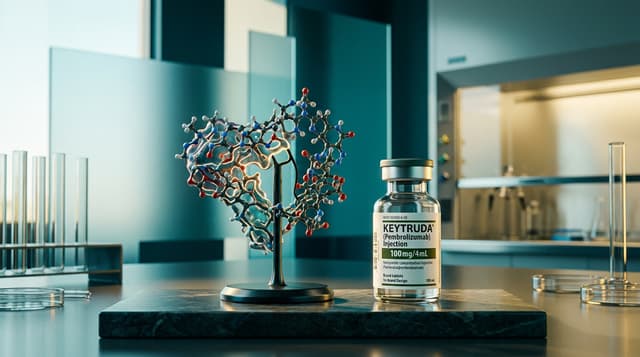
Merck (NYSE:MRK) announced that Japan’s Ministry of Health, Labour and Welfare approved KEYJECT (pembrolizumab and berahyaluronidase alfa-pmph) injection for subcutaneous use across all indications approved for KEYTRUDA in Japan.
KEYJECT, planned as the Japanese trademark for KEYTRUDA QLEX, is a subcutaneous formulation of Merck’s anti-PD-1 therapy that can be administered by healthcare providers in one minute every three weeks or two minutes every six weeks.
“KEYJECT is the first and only subcutaneous immune checkpoint inhibitor available in Japan that can be administered by a healthcare provider in as little as one minute,” said Dr. Marjorie Green, senior vice president and head of oncology, global clinical development, Merck Research Laboratories.
The approval was based on results from the Phase 3 MK-3475A-D77 trial, which compared KEYJECT with KEYTRUDA in combination with chemotherapy for treatment-naïve metastatic non-small cell lung cancer patients without EGFR, ALK or ROS1 genomic tumor abnormalities.
The trial showed comparable pharmacokinetic exposure between KEYJECT and KEYTRUDA, with overall response rates of 45% for KEYJECT plus chemotherapy and 42% for KEYTRUDA plus chemotherapy, while no notable differences were observed in progression-free survival or overall survival.
Merck previously received U.S. FDA approval for KEYTRUDA QLEX in September 2025 and European Commission approval for subcutaneous pembrolizumab in November 2025.