Coach’s growth is reshaping the luxury accessories race
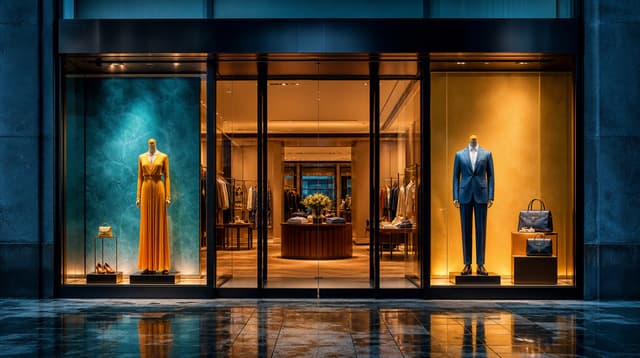
Image for illustrative purposes only. Not a real photo.

Coach’s growth is reshaping the luxury accessories race

Share
  • Tapestry (NYSE:TPR) reported fiscal 2026 revenue of $8 billion, up 14%, as Coach revenue increased 24% for the year.
  • Ralph Lauren is also posting double-digit growth, while Capri and LVMH’s Fashion & Leather Goods business show a more mixed sales picture.
  • The sector now faces uneven consumer demand, tariffs, currency movements and pressure to protect margins while maintaining brand growth.


Tapestry (NYSE:TPR)

Tapestry owns Coach and Kate Spade New York, giving it direct exposure to handbags, leather goods and lifestyle accessories.

Fiscal 2026 revenue increased 14% to $8.004 billion. 

Full-year non-GAAP operating margin reached 23.4%, up 340 basis points, while non-GAAP gross margin expanded 120 basis points to 76.6%.

Coach accounted for most of the growth. 

Revenue at the brand reached $6.915 billion for the year, up 24%. 

Kate Spade revenue declined 10% to $1.075 billion.

The company returned $1.7 billion to shareholders during fiscal 2026 and approved a 16% dividend increase.

For fiscal 2027, Tapestry projects revenue of $8.4 billion to $8.5 billion, representing mid-single-digit growth. 

It also expects operating margin to expand about 50 basis points and EPS to reach $7.80 to $7.90.

The key operating issue is whether Coach can maintain growth while Tapestry works to improve performance at Kate Spade.

Ralph Lauren Corporation (NYSE:RL)

Ralph Lauren competes across premium apparel, handbags, accessories and lifestyle products.

The company reported first-quarter fiscal 2027 revenue of $2 billion, up 14% year over year and 13% in constant currency.

North America revenue increased 13% to $740 million. 

Asia grew 24% to $589 million, while Europe increased 7% to $594 million.

Gross margin reached 73.7%, up 140 basis points. 

Adjusted operating margin was 18.7%, an increase of 170 basis points from the prior-year period.

Ralph Lauren also said women's apparel, outerwear and handbags increased more than 20% in constant currency during the quarter.

For fiscal 2027, the company now expects constant-currency revenue growth of about 5% to 6% on a comparable 52-week basis. 

It projects operating margin expansion of roughly 60 to 80 basis points in constant currency.

That puts Ralph Lauren among the larger premium fashion companies currently reporting both revenue and margin growth.

Capri Holdings (NYSE:CPRI)

Capri Holdings operates Michael Kors and Jimmy Choo, making handbags, footwear and accessories central to its business.

First-quarter fiscal 2027 revenue fell 3.5% to $769 million. 

Gross margin improved 200 basis points to 65%, while adjusted operating margin increased to 3.6% from 2.5%.

Performance differed significantly between its two brands.

Michael Kors revenue declined 7.1% to $590 million. 

Its operating margin decreased to 9.3% from 9.9%. 

Jimmy Choo revenue increased 10.5% to $179 million, while operating margin rose to 7.3% from 2.5%.

Capri also reduced net debt to $224 million from $1.5 billion a year earlier after completing the sale of Versace in December 2025.

The company now projects fiscal 2027 revenue of approximately $3.4 billion. 

It expects Michael Kors revenue of about $2.765 billion and Jimmy Choo revenue of roughly $635 million.

Capri's results provide a direct contrast with Tapestry because Michael Kors and Coach compete across overlapping handbag and accessories categories.

Burberry Group (LSE:BRBY)

Burberry operates in luxury apparel, outerwear and accessories, including handbags and leather products.

Retail revenue reached £455 million during its fiscal 2027 first quarter, up 5% on a reported basis and 4% at constant exchange rates. 

Comparable retail sales increased 5%.

The Americas recorded 12% comparable growth, while Greater China increased 9%. 

Asia Pacific rose 3%, while EMEIA declined 3%.

Burberry also said women's handbags returned to growth during the quarter. 

E-commerce revenue increased at a mid-teens rate.

The improvement follows fiscal 2026 revenue of £2.420 billion and adjusted operating profit of £160 million. 

Adjusted operating margin was 6.6%, compared with 1% in the previous year.

For fiscal 2027, Burberry said it expects further progress toward revenue growth and margin expansion, while noting uncertainty around consumer confidence and the macroeconomic environment.

LVMH Moët Hennessy Louis Vuitton (EPA:MC)

LVMH provides a much larger luxury benchmark through brands including Louis Vuitton and Dior.

The group reported first-half 2026 revenue of €38.644 billion, down 3% on a reported basis but up 2% organically. 

Profit from recurring operations reached €8.691 billion.

Its Fashion & Leather Goods division is the closest comparison with Tapestry.

The division generated €18.146 billion in first-half revenue, down 5% on a reported basis and 1% organically. 

However, organic revenue returned to 1% growth during the second quarter.

Fashion & Leather Goods profit from recurring operations declined 7% to €6.195 billion.

LVMH's results show that demand across premium and luxury accessories is not moving uniformly. 

Some brands and regions are expanding while others remain under pressure from currency movements and changing consumer demand.

The bottom line

Premium fashion companies are producing increasingly different growth profiles.

Tapestry generated 14% annual revenue growth, with Coach up 24%. 

Ralph Lauren's latest quarterly revenue increased 14%, while Burberry reported 5% comparable retail growth.

Capri remains in a restructuring phase, with Michael Kors sales declining while Jimmy Choo grows. 

LVMH's Fashion & Leather Goods division also reported lower first-half revenue despite returning to organic growth in the second quarter.

The common challenge is balancing brand investment, pricing and full-price sales against tariffs, currency changes and uneven discretionary spending. 

Company forecasts also assume that current macroeconomic and trade conditions do not materially worsen.

Frequently asked questions