
Oil prices jump 4% after Iran tensions rise
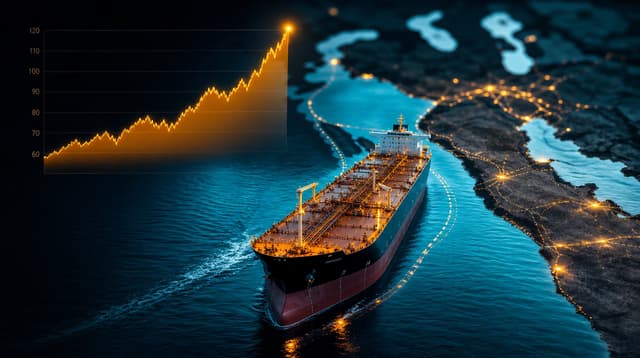
Brent crude futures rose 4% to above $79 per barrel in Asian trading after renewed U.S.-Iran tensions and claims of disruption around the Strait of Hormuz increased concerns about global oil supply.
Iran and the United States traded tit-for-tat attacks over the weekend, with both sides issuing conflicting declarations on whether the Strait of Hormuz is open for shipping. John Sfakianakis, Chief Economist and Head of Research at the Gulf Research Center, told Abeer Abu Omar on Horizons Middle East and Africa that return to a full scale-war is a possibility but we are "not yet" there.
This summer's heat waves may have already resulted in more than 2,700 deaths in England and Wales. That's according to an estimate published on Monday by researchers at Imperial College London, the UK Met Office and the London School of Hygiene and Tropical Medicine. Bloomberg's Joe Wertz reports.
Private capital data platform, Magnitt, says Middle East venture funding fell 22% in the first half of the year, with actual deal count plunging by 41%. Many of the deals were signed before the US-Israel attacks on Iran. CEO Philip Bahoshy told Abeer Abu Omar on Horizons Middle East and Africa that the real test will hit this summer.
SK Hynix shares declined in Seoul on Monday after the memory chipmaker's highly-anticipated US trading debut. The company's $26.5 billion US offering was closely watched as a test of demand for overseas offerings as well as for the longevity of the artificial intelligence rally. Bloomberg's Neil Campling reports.
Ferguson Enterprises (NYSE:FERG) agreed to acquire FWI Holdings, the parent company of FloWorks, from Wynnchurch Capital in a cash transaction valuing FloWorks at approximately $1.6 billion in enterprise value.
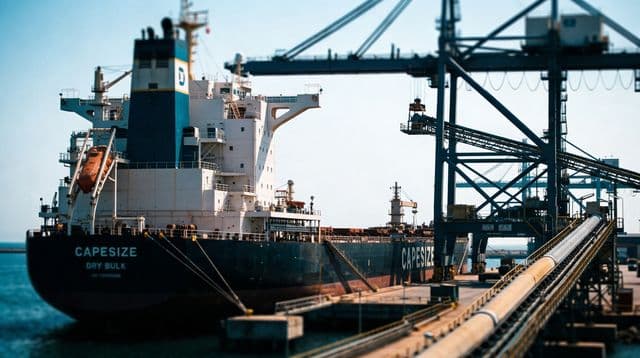
Genco Shipping & Trading (NYSE:GNK) rejected a $24.80 per share offer from Diana Shipping (NYSE:DSX), stating it undervalues the business.
The US military launched air strikes against 140 targets in Iran following an Iranian drone strike on a commercial container ship in the Strait of Hormuz.
Rep. Greg Stanton says the Trump administration needs a stronger diplomatic strategy to reopen the Strait of Hormuz and negotiate a more accountable agreement with Iran, warning the conflict has increased economic and geopolitical risks. He also defends closer ties with Canada, Mexico and other US allies as essential to competing with China, while condemning settler violence in the West Bank following an incident involving Rep. Ro Khanna.
Martha Gimbel, executive director and cofounder of the Budget Lab at Yale University, says artificial intelligence is unlikely to offset the economic challenges of an aging population, arguing the US is confronting two major transitions at the same time rather than one solving the other. She says AI could improve productivity in some areas, particularly by helping caregivers with physically demanding tasks, but questions whether consumers will embrace automation in roles where human interaction remains essential.
Former US ambassador to NATO Kurt Volker says the NATO summit reinforces alliance unity, strengthens support for Ukraine and sends a tougher message to Russian President Vladimir Putin, while praising President Donald Trump's more constructive engagement with President Volodymyr Zelensky. Volker says Ukraine's battlefield innovation and sustained pressure on Russia are shifting the conflict's momentum, though he warns Putin remains committed to the war and is unlikely to negotiate without greater leverage.
Bloomberg Intelligence senior commodities strategist Mike McGlone says oil markets are largely accepting US assurances that the Strait of Hormuz remains open, with expanding Western Hemisphere supply and alternative export routes limiting the long-term impact of Gulf disruptions on crude prices. He says gasoline and diesel prices remain elevated because refining margins have widened, but expects crude oil prices to trend lower over time as global supply grows and demand softens.