
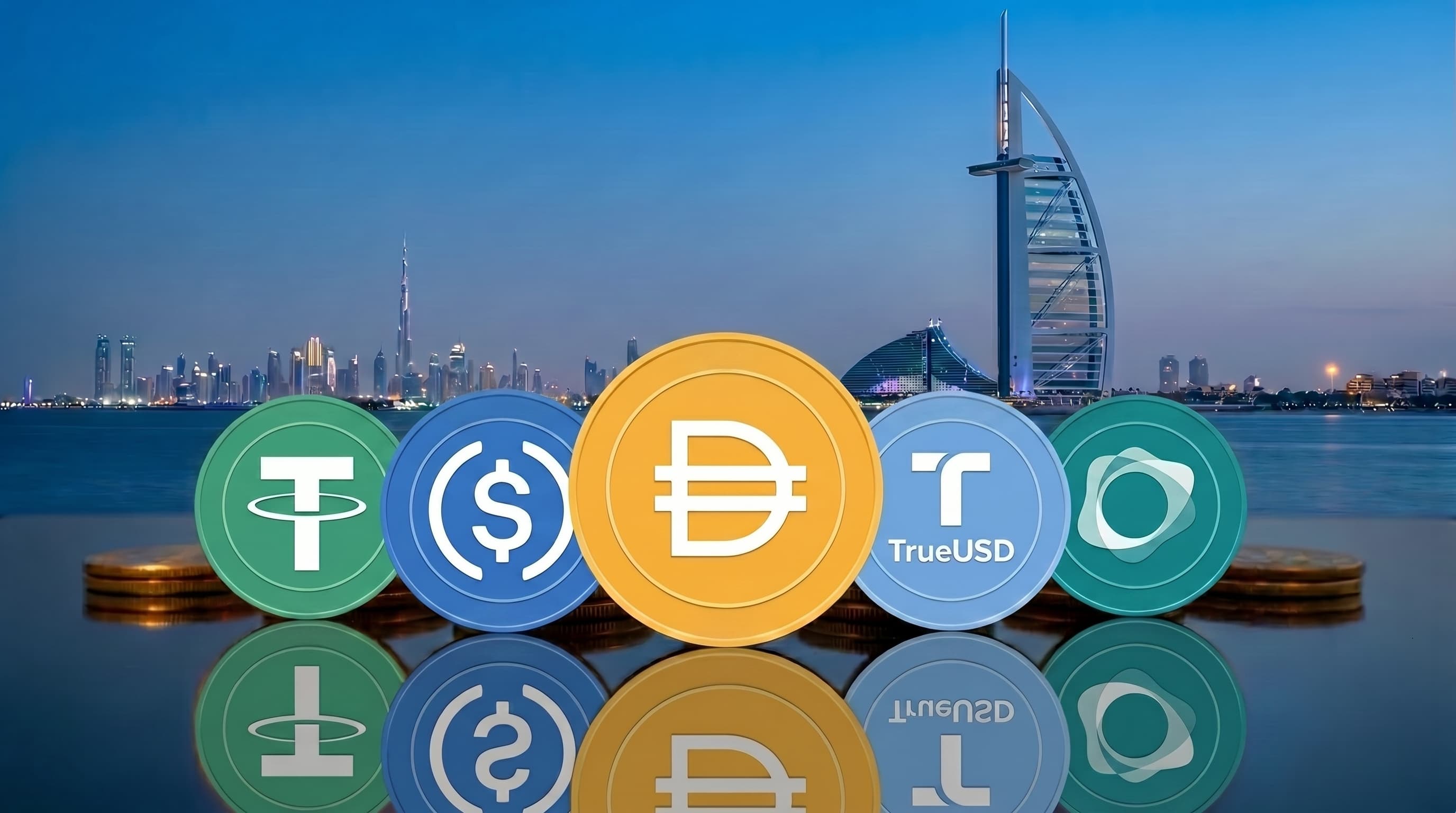
UAE positions itself for stablecoin payments era

The United Arab Emirates is emerging as a key hub for the convergence of traditional banking and blockchain-based payments as stablecoins become an increasingly important part of global financial infrastructure.
Stablecoin payments exceeded $350 billion last year, reflecting growing adoption among businesses that use digital dollars to move working capital, settle transactions and make cross-border payments without relying on traditional banking schedules.
Industry participants argue that the long-standing separation between banking rails and blockchain networks is becoming unsustainable as companies seek a single system capable of handling both traditional and digital payment flows.
For years, businesses operating across conventional finance and crypto markets maintained separate infrastructures, with bank accounts and payment networks on one side and blockchain wallets and stablecoin settlement systems on the other.
As stablecoin usage expands, companies are facing mounting challenges around reconciliation, compliance, transaction monitoring and reporting because data must be managed across multiple disconnected platforms.
The UAE is viewed as particularly important in this transition due to its position as a major crossroads for trade, investment and remittance flows spanning the Middle East, Africa and Asia.
Supporters of multi-rail payment infrastructure believe jurisdictions that combine regulatory clarity, strong market demand and systems capable of supporting both banking and blockchain networks will lead what could become the largest transformation in global money movement since the rise of card payment networks.