
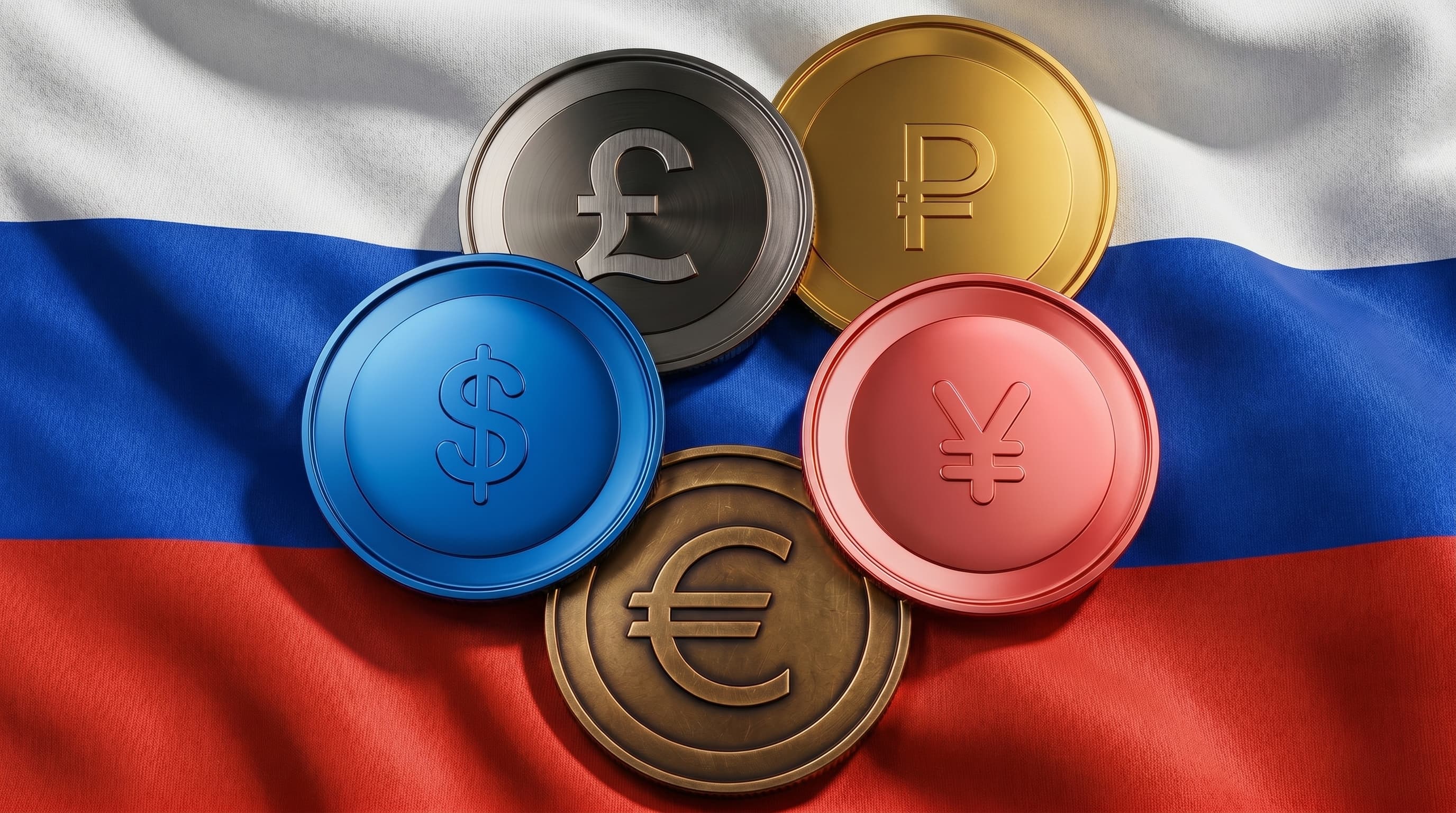
Russian stablecoin push grows under sanctions pressure

A7 executive Stanislav Lazarev said growing sanctions pressure from Western countries is driving Russia toward alternative cross-border payment systems, including digital assets and stablecoins.
Lazarev stated that the structure of Russian foreign trade settlements has shifted significantly, with the ruble accounting for more than 53% of import-related transactions and friendly-country currencies representing a combined 85% of settlement activity.
“If we look at a one- to two-year horizon, we’ll see a complete transition to alternative and independent payment solutions,”
Lazarev told Izvestia.
The executive argued that ongoing compliance requirements and the risk of secondary sanctions will encourage businesses to move away from traditional international payment networks toward independent settlement infrastructure.
Lazarev said digital solutions, including stablecoins, are expected to play an increasingly important role in this transition and highlighted A7A5 as the only ruble-denominated stablecoin that has received digital financial asset status for cross-border settlements in Russia.
Founded in 2024, A7 claims to work with more than 10,000 trade partners and estimates that it facilitates nearly 20% of Russia's international settlement market.
The company said the A7A5 stablecoin has facilitated almost $100 billion in transactions involving sanctioned entities, underscoring the growing role of digital assets in international trade conducted outside traditional financial channels.
Despite its adoption, A7A5 has been targeted by sanctions from the US Office of Foreign Assets Control, the European Union and the United Kingdom, while some exchanges supporting the asset have also faced regulatory pressure and enforcement actions.