
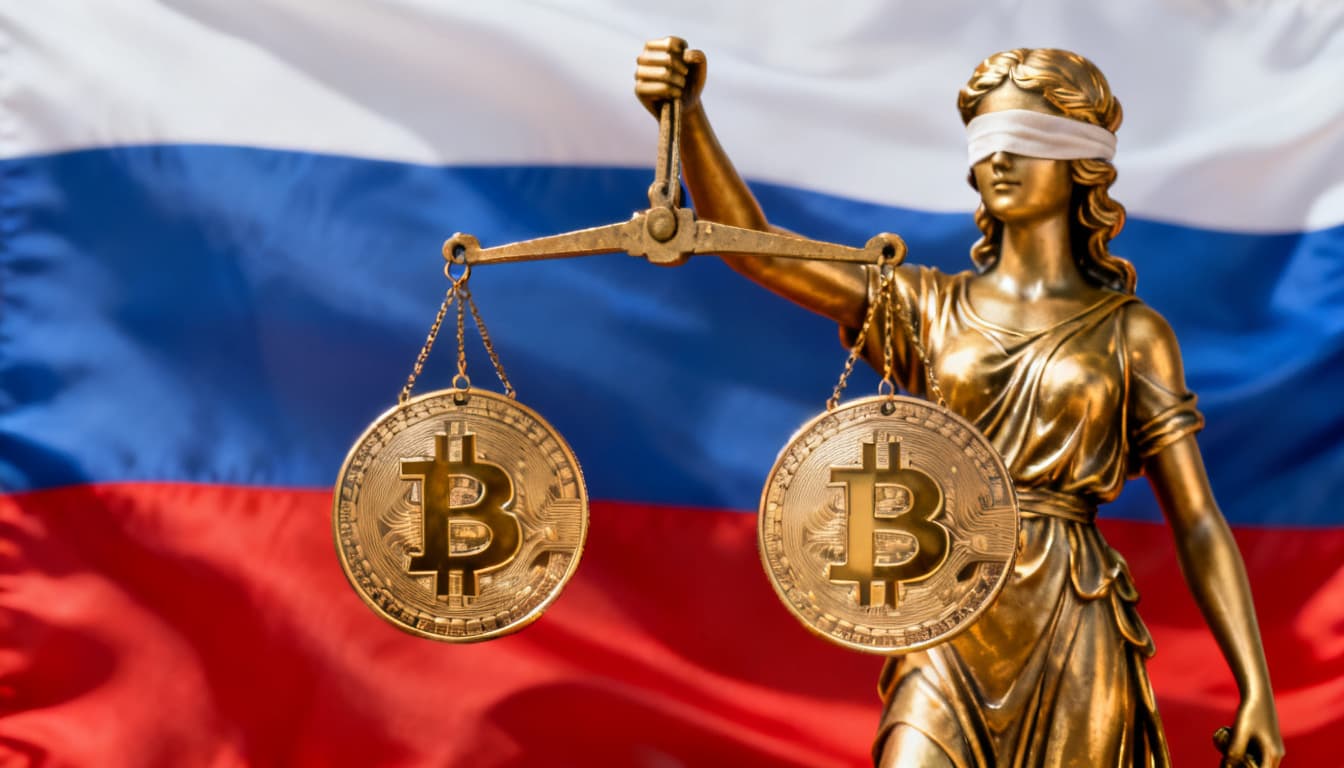
Russia advances crypto bill with revised disclosure rules

- Russia's State Duma committee approved a revised cryptocurrency bill that removes mandatory wallet address disclosures.
- The proposal would allow cryptocurrencies to be used to purchase Russian securities and digital financial assets while retaining a 300,000-ruble annual retail investment limit.
- The bill also introduces temporary transfer freezes for certain large overseas cryptocurrency transactions as it moves toward a second reading.
Russia's State Duma Financial Market Committee has approved a revised cryptocurrency bill that removes a requirement for users to disclose wallet addresses while advancing the legislation toward its second reading.
The updated proposal requires cryptocurrency holders to report wallet balances and transaction volumes instead of wallet addresses, while committee chairman Anatoly Aksakov said the change is intended to reduce the risk of sensitive information being exposed.
“The revision is intended to reduce the risk of sensitive information being exposed in ways that could be used against Russia,” said State Duma Financial Market Committee Chairman Anatoly Aksakov.
The revised bill would allow cryptocurrencies to be used to purchase Russian securities and digital financial assets, retain the annual 300,000-ruble retail investment limit for non-qualified investors, and require certain large overseas or third-party cryptocurrency transfers to be frozen for up to two days, although the threshold has not been specified.
If approved through the remaining legislative stages, the bill would establish a broader regulatory framework for Russia's cryptocurrency market, while continuing to prohibit domestic cryptocurrency payments except for approved cross-border trade.
The legislation first passed its initial reading in April and proposed placing the Bank of Russia in charge of licensing cryptocurrency exchanges, brokers and other market participants, while recognising cryptocurrencies as property under Russian law.
The latest revisions come ahead of the planned Sept. 1 launch of Russia's digital ruble, when major banks and large merchants are scheduled to begin supporting the central bank digital currency under the country's rollout plan.
Frequently asked questions
More from Crypto
Chainlink launches CustodySync for institutional DeFi lending
South Korea weighs education tax on crypto exchanges
RedotPay weighs confidential US IPO filing for year-end
StoneX raises Strive price target to $43
South Korean police arrest seven in AI-powered data theft
Aviva Investors launches tokenised £22 billion liquidity fund