

Plunging transport costs drive drop in household spending

Australian household spending fell by 1.1% in April, driven primarily by a sharp decline in transport costs, according to seasonally adjusted figures released by the Australian Bureau of Statistics.
The downturn follows a 1.6% rise in March, slowing annual spending growth to 4.9%.
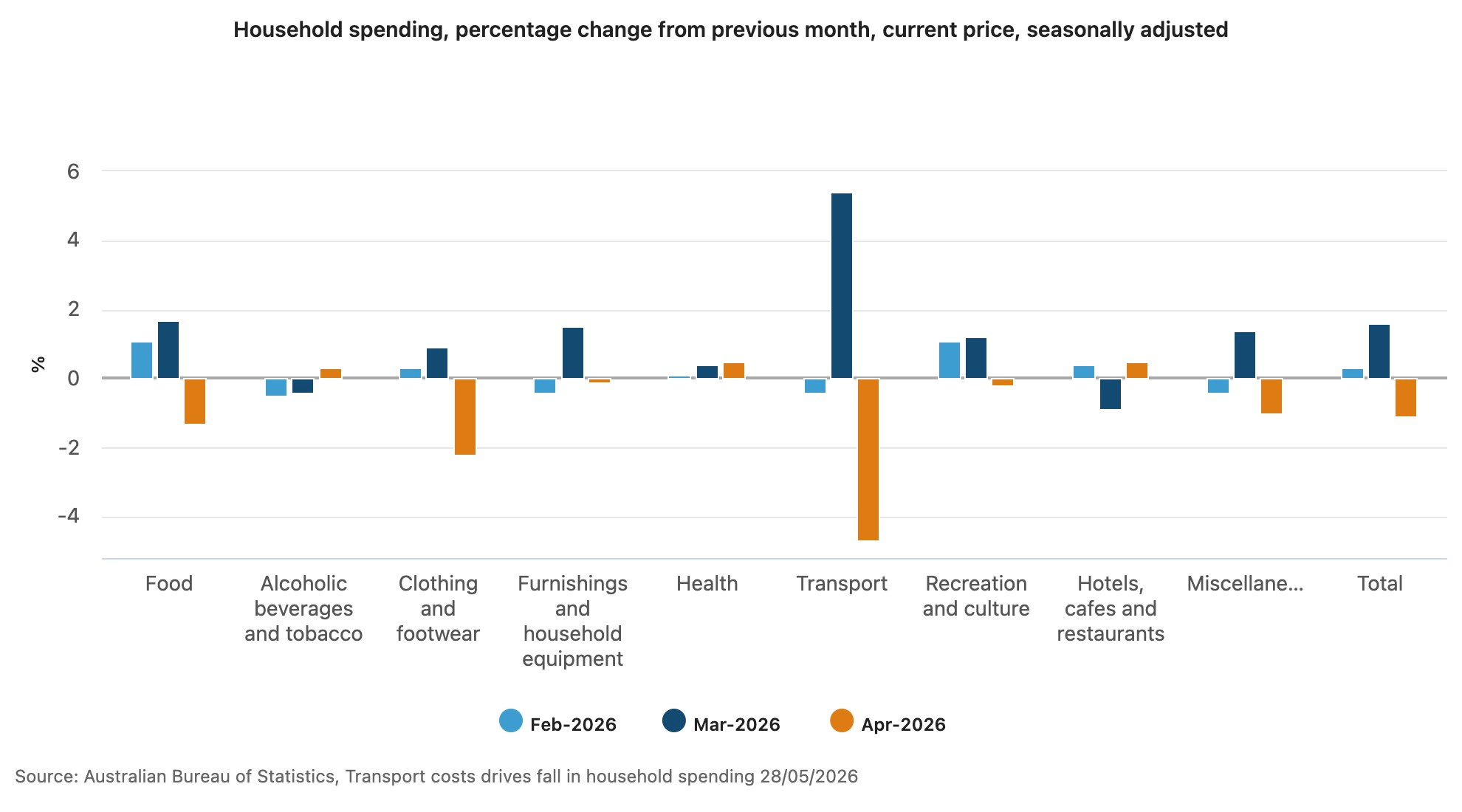
Tom Lay, ABS head of business statistics, confirmed that a 4.7% drop in transport costs was the main catalyst for the monthly reduction.
The decline heavily reflected consumer responses to the ongoing conflict in the Middle East, with air transport proving the largest contributor as households scaled back travel amidst regional uncertainties.
Higher jet fuel prices forced airlines to cancel routes to maintain financial viability, resulting in widespread refunds that registered as a spending reduction.
While overall fuel prices remained elevated due to the geopolitical tension, pump costs eased compared to March.
The stabilisation was directly supported by the federal government halving the fuel excise duty on 1 April, alongside state-level public transport subsidies in Victoria and Tasmania.
Food spending dropped 1.3% as purchasing patterns normalised following a high-demand March.
Supermarkets reported a continued consumer shift towards generic brands, highlighting ongoing household price consciousness.
A surge in electric vehicle sales provided a partial offset to the broader transport slump.