

Australian inflation rises to 4.9% in October
 By Liezl Gambe
Key points
- Australian consumer prices rose 4.9% in the 12 months to October, driven by higher housing and transport costs.
- Underlying trimmed mean inflation climbed to 3.8%, while headline electricity bills surged 25.2% over the past year.
- The Australian Bureau of Statistics attributed the electricity spike to the expiration of Commonwealth government household rebates.
The Australian Bureau of Statistics reported that Australia's consumer price index rose 4.9% in the year to October.
This annual inflation rate accelerated from the 4.3% increase recorded in the 12 months to September.
“Housing was the largest contributor to annual inflation in October, rising by 6.4% compared to a rise of 5.2 per cent in the 12 months to September,” said ABS head of price statistics Rachael McCririck.
Electricity costs jumped 25.2% annually after Commonwealth government rebates expired, while new dwelling prices increased 5.1% due to higher labour and material expenses.
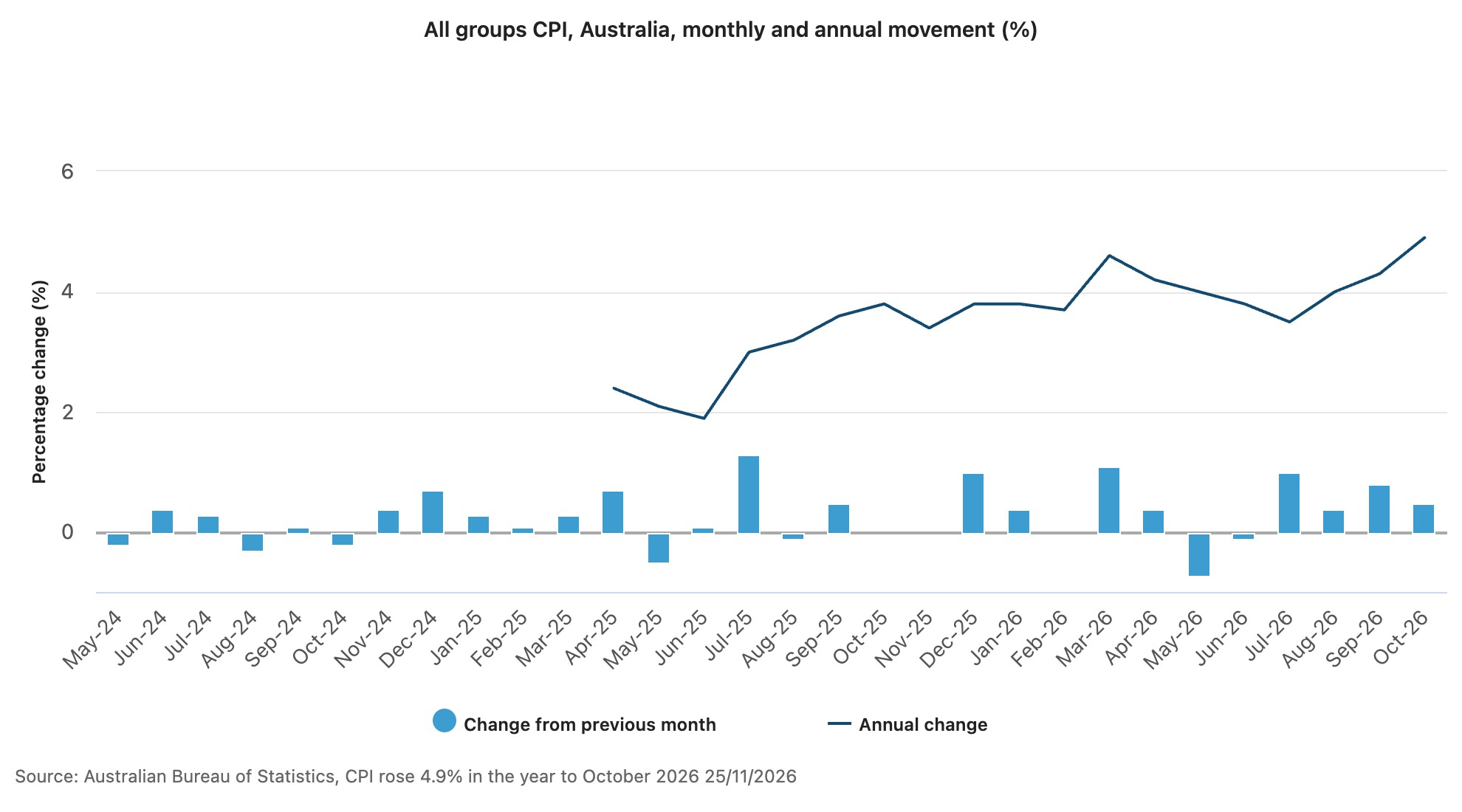
Transport was the second-largest inflation driver at 10.6% annually, as higher global oil prices pushed monthly automotive fuel costs up 6.3% in October.
To look past temporary price shocks, the ABS tracks trimmed mean inflation, which excluded automotive fuel in October and rose to 3.8% from 3.6% in September.
While this macroeconomic report covers national consumer prices rather than an individual listed company, housing and fuel remain the primary drivers of Australia's cost-of-living pressures.
Frequently asked questions
More from Australia
Marimaca Copper secures US$450M Sprott financing approval
Harvey Norman preliminary profit drops 47%
Plenti reports 43% profit growth and inaugural dividend
New Zealand King Salmon posts NZ$30.7M full-year profit
KMD Brands reports 1.6% first-quarter sales growth
WiseTech Global founder cleared in police probe

