

Australian inflation eases to 4.2% in April

Australia's annual inflation rate eased to 4.2% in the 12 months to April, down from 4.6% in March, according to the Australian Bureau of Statistics.
Despite the headline deceleration, underlying inflation pressures intensified, with the trimmed mean rising slightly to 3.4%, up from 3.3% the previous month.
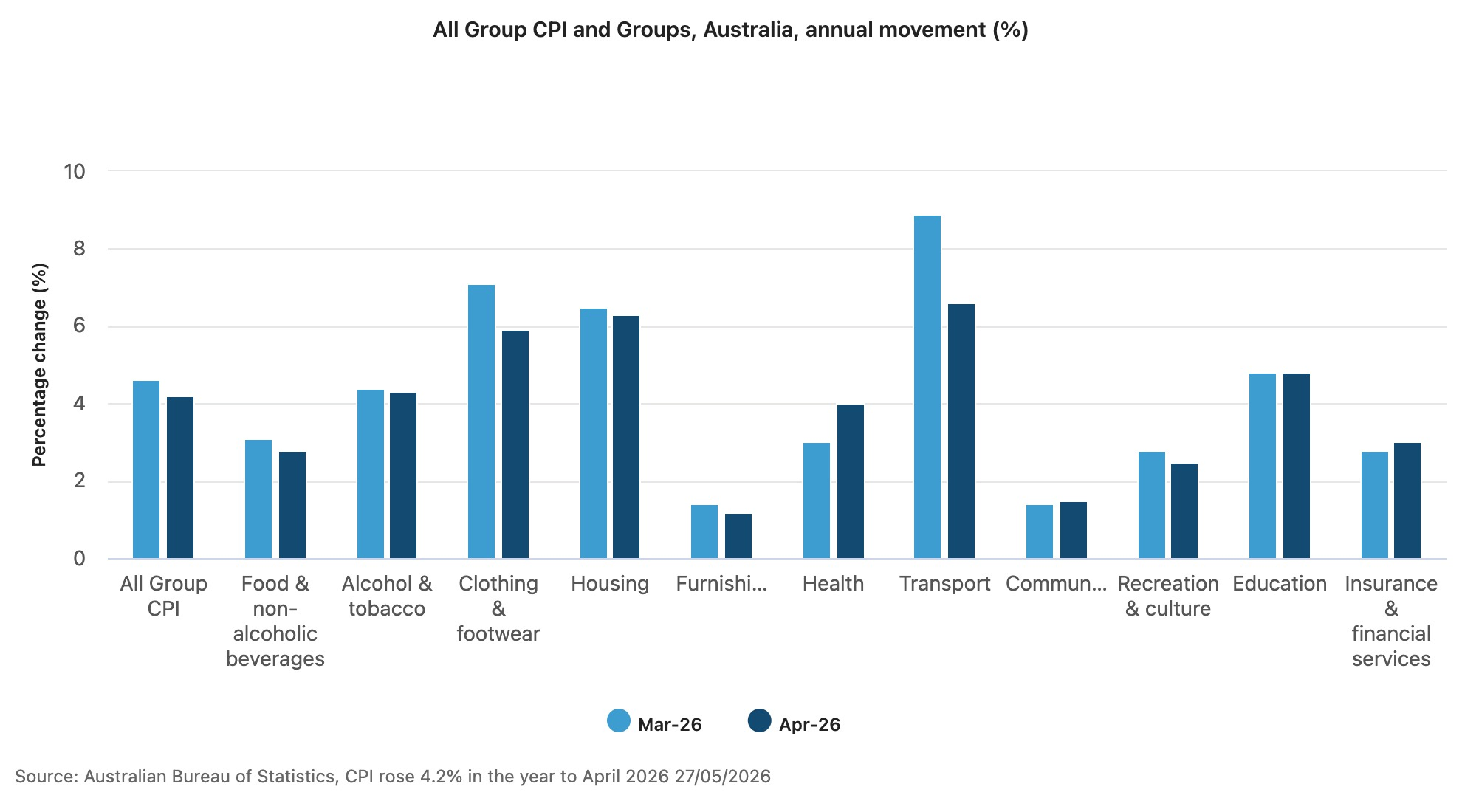
ABS head of prices statistics Sue-Ellen Luke noted that while seven of the eleven Consumer Price Index groups experienced a slowdown, structural costs remain high.
Housing led the inflationary charge with a 6.3% annual surge, driven heavily by a 22.5% spike in electricity costs following the expiration of government energy rebates, alongside rising costs for rents and new dwelling construction.
Transport costs also climbed 6.6% annually, though this marked a moderation from March's 8.9% peak.
The easing was largely due to a 7% month-on-month drop in automotive fuel prices, influenced by the halving of the fuel excise on April 1.
Average regular unleaded petrol prices dipped 10% to $2.06 per litre. However, diesel bucked the trend, jumping 14% to $2.92 per litre despite the excise cut.
Ms Luke cautioned that fuel prices remain 23.5% higher than February levels due to the Middle East conflict.
The sustained oil pressures continue to filter into supply chains, inflating freight-reliant sectors and driving a 12.4% annual increase in postal services.