

Australian economic growth slows to 0.3% in March quarter

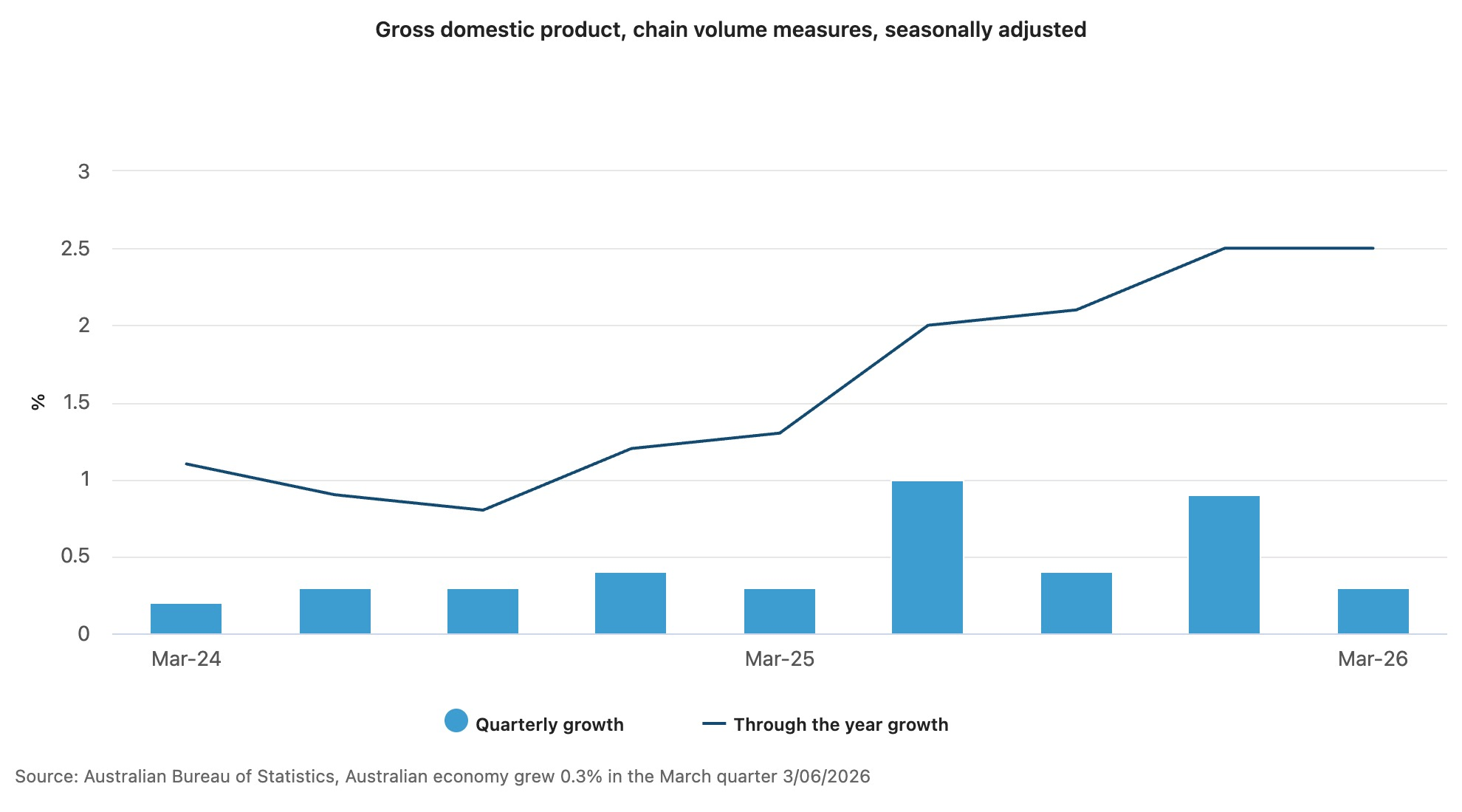
The Australian economy experienced a cooling phase in the opening months of 2026, with gross domestic product edging up by just 0.3% in the March quarter.
Figures released by the Australian Bureau of Statistics reveal that while annual growth managed a 2.5% expansion, domestic momentum was heavily choked by severe weather disruptions, surging utility bills, and cautious consumer habits.
According to Grace Kim, ABS head of National Accounts, a combination of modest public sector outlays and severe cyclone activity hitting mining hubs severely hindered export performance.
Net trade slashed 0.8 percentage points from overall growth, triggered by a steep 1.1% drop in exports — the sharpest decline in two years — as coal and mineral ore shipments plunged.
Household spending rose a subdued 0.5%, propped up primarily by an 11.7% rise in electricity and gas bills as government energy rebates wrapped up.
Faced with high interest rates and escalating fuel prices ahead of April’s fuel excise halving, consumers cut back, with essential spending growing by 0.8% while discretionary outlays stalled at a flat 0.1%.
The household saving‑to‑income ratio slid from 7% to 6.2% as living costs outpaced disposable income.
The silver lining came from corporate Australia, where private business investment leapt 6%.
This was powered by a historic 16.3% boom in machinery and equipment investment — the largest in three decades — driven by rapid data centre expansions across New South Wales and Victoria.