
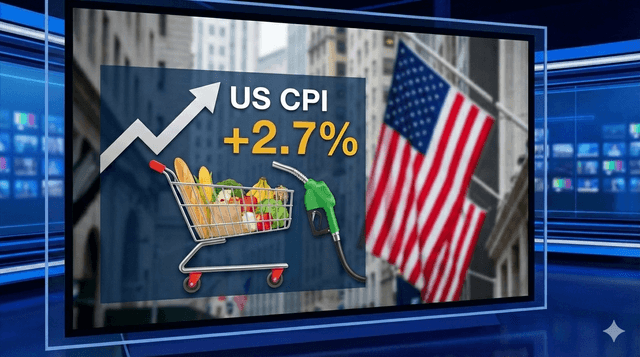

The U.S. Consumer Price Index (CPI) rose at an annual rate of 2.7% in December 2025, matching the previous month’s pace and signaling that the long-awaited "last mile" to the Federal Reserve’s 2% target remains elusive.
The data, released Tuesday by the Bureau of Labor Statistics, capped a year defined by economic resilience but stained by persistent pressure on household budgets.
Core inflation, which strips out volatile food and energy costs, provided a rare bright spot by ticking down to 2.6% over the past 12 months—slightly below the 2.7% predicted by economists.
However, the relief at the "core" was largely overshadowed by a surge in the kitchen.
Food prices jumped 3.1% annually, an acceleration from November’s 2.6% increase.
Groceries continued to squeeze consumers, with coffee prices surging nearly 20% and ground beef climbing 15.5%, though egg prices provided a reprieve by falling 20.9% from their peaks.
The 2025 economic narrative was further complicated by the Trump administration’s tariff regime.
While some economists feared the levies on imported goods would reignite a 2022-style inflation spike, the impact was more muted as many retailers chose to absorb the costs to protect sales volumes.