

Transocean (NYSE:RIG), the Steinhausen, Switzerland-based offshore drilling titan, reported a complex set of fourth-quarter and full-year results, where strong operational cash flow and a multi-billion-dollar backlog were overshadowed by massive non-cash impairment charges.
The company posted a staggering full-year net loss of $2.915 billion, or $3.04 per diluted share, a sharp decline from the $512 million loss recorded in 2024.
The primary culprit was a $3.036 billion non-cash impairment charge related to the retirement of older vessels and a strategic shift in fleet valuation.
However, on an adjusted basis—stripping out these one-time items—Transocean delivered an adjusted net income of $37 million ($0.04 per share), marking a critical pivot toward underlying profitability.
Operationally, the firm demonstrated significant momentum.
Full-year contract drilling revenues rose 13% to $3.965 billion, supported by a fleet uptime performance of 96.5%.
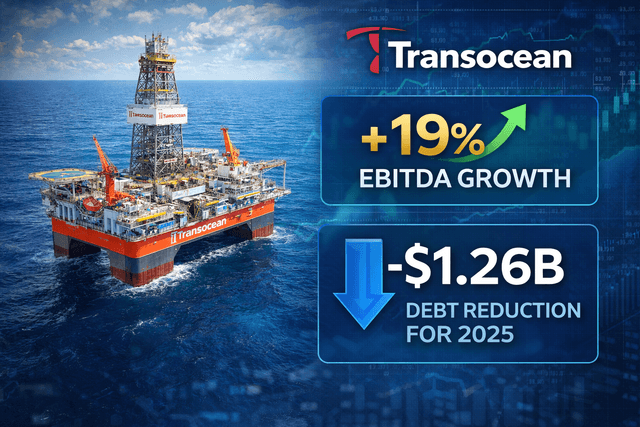
Adjusted EBITDA surged 19% to $1.37 billion, while the company successfully slashed its total debt by $1.26 billion, ending the year with a principal balance of $5.686 billion.
The company’s forward-looking "Fleet Status Report" was a highlight for analysts, revealing that Transocean added $839 million in new contract backlog during the period at a robust weighted-average dayrate of $453,000.
As of February 19, 2026, the company’s total backlog stands at approximately $6.1 billion, providing significant revenue visibility through 2027.
Looking ahead to 2026, Transocean expects to benefit from its pending $5.8 billion acquisition of Valaris, a deal that will create a combined powerhouse with a 73-rig fleet and a pro-forma backlog of roughly $10 billion.