
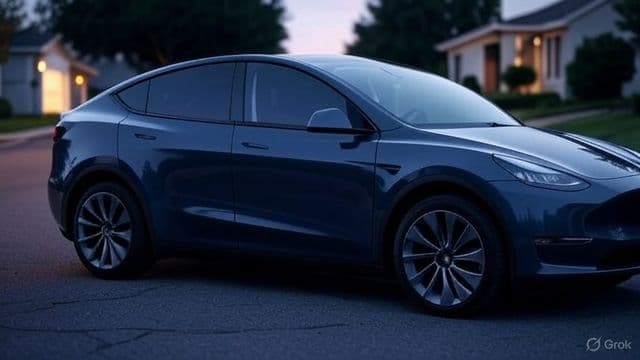

Tesla's (NASDAQ:TSLA) grip on the European electric vehicle market is showing signs of significant strain as new registration data reveals a sharp divergence between the U.S. automaker and its Chinese rivals.
According to data released by the European Automobile Manufacturers' Association (ACEA), Tesla registrations fell to 8,075 units in January, marking a 17% decline compared to the same period last year.
The slump occurred despite a 13.9% increase in total electric vehicle registrations across Europe, the U.K., and the European Free Trade Association, suggesting that Tesla is losing ground to competitors in a growing segment.
The beneficiary of this shift appears to be BYD, whose European sales have climbed consistently since the ACEA began tracking the manufacturer last summer.
While the U.S. market has seen a cooling of EV demand, European consumers are increasingly opting for the inexpensive electric models and hybrids produced by Chinese firms such as BYD and Li Auto.
Industry analysts point to a combination of brand fatigue and a stagnant product pipeline as primary drivers for Tesla’s regional underperformance.
In Europe, where CEO Elon Musk has faced declining personal favorability ratings, the company’s brand image has come under pressure.
Furthermore, the absence of a high-volume, low-cost "Model 2" or equivalent has left Tesla without a direct competitor to the budget-friendly hatchbacks and SUVs arriving from Asia.
While Tesla remains largely insulated from direct Chinese competition in the U.S. due to trade barriers, other Western automakers are already shifting their strategies to integrate Chinese technology.
Ford Motor is reportedly exploring joint ventures to manufacture Chinese-designed vehicles domestically, while Stellantis has moved forward with a partnership with Leapmotor to co-develop vehicles for the global market.