
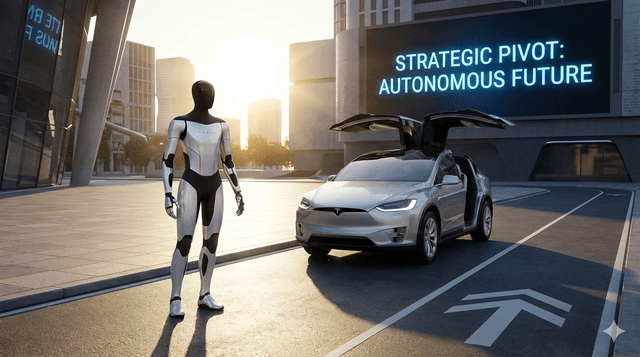
Tesla (NASDAQ:TSLA) signaled a definitive shift from automaker to AI powerhouse Wednesday, reporting fourth-quarter earnings that surpassed analyst estimates even as its core electric vehicle business continues to cool.
The Austin-based company posted adjusted earnings of $0.50 per share, beating the $0.45 expected by Wall Street.
While revenue fell 2.4% year-over-year to $24.90 billion, a surprise expansion in gross margins to 20.1% sent shares up more than 3% in after-hours trading.
The financial results were secondary to CEO Elon Musk’s roadmap for 2026, which centers on a massive hardware and robotics scale-up.
Tesla confirmed that production for the highly anticipated Cybercab and Tesla Semi remains on track for the first half of 2026.
More significantly, the company set an ambitious year-end goal for the production of its "Optimus" humanoid robots, with a long-term capacity target of one million units annually.
To fuel these ambitions, Tesla disclosed a $2 billion investment in xAI, Musk’s artificial intelligence startup, aiming to tighten the integration between the two entities.
The pivot toward "real-world AI" comes at a critical juncture.