
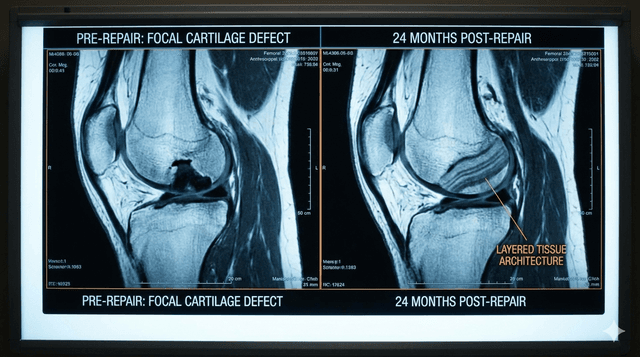

Regentis Biomaterials (NYSE:RGNT) shares gained after new long-term imaging data showed its hydrogel implant successfully regenerated knee cartilage with a structural complexity nearly identical to healthy human tissue.
The data, published in the peer-reviewed journal Cartilage, analyzed patients 24 months after receiving GelrinC, a cell-free, off-the-shelf scaffold.
Using the MOCART (Magnetic Resonance Observation of Cartilage Repair Tissue) scoring system—a validated methodology accepted by the FDA and EMA—researchers found a mean score of 88.8 out of 100.
Critically, the MRI results revealed a "layered architecture" comparable to native hyaline cartilage, suggesting the treatment provides a biological restoration rather than the weaker, fibrotic "filler" tissue common in traditional surgeries.
The findings provide a significant boost to the company’s regulatory strategy as it advances its pivotal Phase III SAGE study in the United States.
GelrinC, which is applied as a liquid and cured in situ with UV light, is already commercially available in Europe under CE Mark approval.
"These results reinforce GelrinC’s potential to deliver authentic, long-lasting regeneration," said Dr. Ehud Geller, Executive Chairman of Regentis.
The company expects the superior structural data to support its future Premarket Approval (PMA) submission to the FDA.