
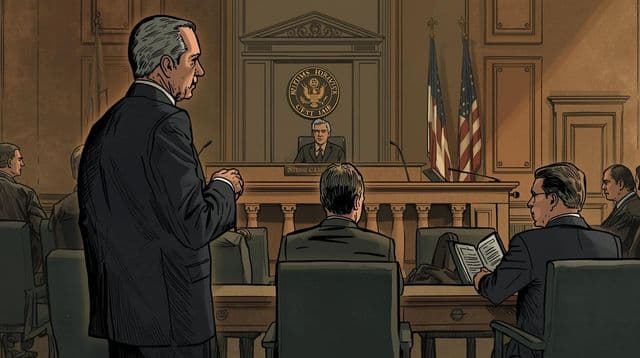
The Commodity Futures Trading Commission has concluded its long-running civil enforcement case against former JPMorgan precious-metals traders Michael Nowak and Gregg Smith.
The case formally ended on Dec. 22, 2025, when a US district judge entered consent judgments resolving all remaining claims.
The settlements bring to a close one of the most prominent civil spoofing cases linked to Wall Street metals trading desks.
The lawsuit was first filed more than six years ago, reflecting the complexity of the investigation and proceedings.
Under the consent judgment, Gregg Smith agreed to pay a $200,000 civil monetary penalty.
Smith is permanently restrained from engaging in spoofing or any conduct prohibited under the Commodity Exchange Act.
He is also banned for three years from trading on or subject to the rules of any registered entity.
The restrictions further bar Smith from trading commodity interests for his own or others’ accounts.
He is also prohibited from directing trading activity, soliciting funds, or seeking registration with the CFTC during the ban period.
Michael Nowak, former global head of precious-metals trading at JPMorgan, agreed to pay a $150,000 civil penalty.
Nowak is subject to a permanent injunction against spoofing-related conduct.
He also faces a six-month ban from trading commodity interests or engaging in activity requiring CFTC registration.
The settlement includes restrictions on directing trades and soliciting funds during the ban.
As part of the resolution, both parties agreed to dismiss additional counts in the complaint with prejudice.
The dismissals formally close the CFTC’s civil action against both defendants.
The CFTC originally filed the case in September 2019.
Regulators alleged the traders engaged in a years-long scheme to manipulate precious-metals futures prices.
The alleged misconduct spanned from at least 2008 through 2015.
The trading activity occurred on futures exchanges operated by CME Group.
According to the complaint, thousands of large orders were placed in gold, silver, platinum and palladium futures.
Regulators said the orders were intended to be cancelled before execution.
The CFTC alleged the strategy created false signals of supply and demand in the market.
Other traders were allegedly induced to transact at prices that benefited the defendants’ genuine orders.
The regulator said the conduct allowed faster fills, larger sizes or improved prices.
The agency claimed the spoofing activity was not isolated and was known on the trading desk.
Smith was also accused of instructing junior traders on how to engage in spoofing.
The civil case ran alongside a broader criminal investigation by the US Department of Justice.
That probe focused on spoofing in precious-metals and US Treasury futures markets.
In 2020, JPMorgan agreed to pay $920 million to resolve criminal charges tied to the investigation.
Several former traders were later convicted in related criminal cases.
The CFTC’s civil action sought market bans and penalties rather than prison sentences.
Regulators said the outcome reflects the maturity of spoofing enforcement since the financial crisis.
Permanent injunctions and trading bans effectively remove both traders from regulated derivatives markets.
The resolution closes a significant chapter in post-crisis oversight of metals market manipulation.