
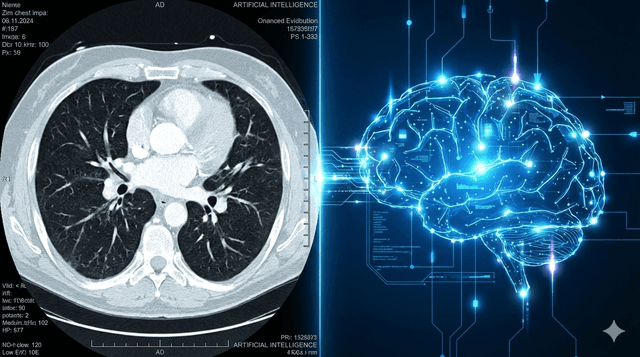

Bristol Myers Squibb (NYSE:BMY) has partnered with Microsoft (NASDAQ:MSFT) to deploy artificial intelligence tools aimed at identifying lung cancer in its earliest stages, marking the latest push by a pharmaceutical giant to integrate big tech’s machine learning into clinical care.
The collaboration will utilize FDA-cleared radiology AI algorithms through Microsoft’s Precision Imaging Network, a platform currently used by more than 80% of U.S. hospitals.
By analyzing X-ray and CT images, the AI-enabled workflow is designed to help radiologists spot subtle lung nodules that are often missed by the human eye.
The initiative specifically targets "incidental findings"—cases where a patient is scanned for an unrelated issue, but signs of early-stage cancer are present—addressing a critical gap where more than half of such patients are currently lost to follow-up.
A primary goal of the deal is to improve health equity by expanding advanced diagnostic capabilities to medically underserved communities, including rural hospitals and community clinics.
"By combining Microsoft’s highly scalable radiology solutions with our deep expertise in oncology, we have envisioned a unique workflow that helps clinicians quickly identify patients with non-small cell lung cancer and guide them to optimal care," said Alexandra Goncalves, Vice President and Head of Digital Health at Bristol Myers Squibb.
The move follows a broader industry trend of "digital transformation" in oncology, coming just a week after rival AstraZeneca (NASDAQ:AZN) moved to acquire AI specialist Modella AI to accelerate its own drug research.