
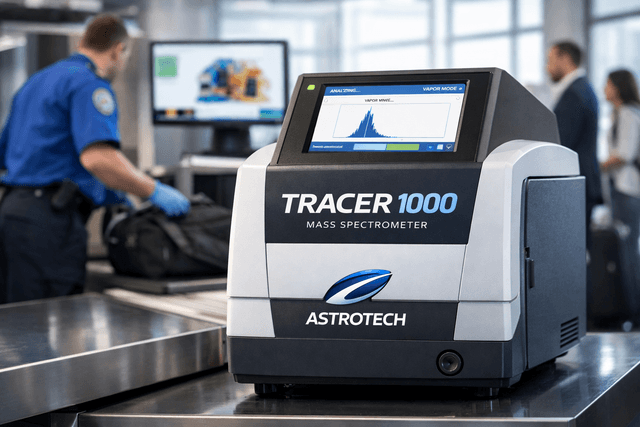

Astrotech (NASDAQ:ASTC) signaled a major pivot from development to commercialization in its fiscal second-quarter results, slashing research spending as its flagship mass spectrometry devices gain a foothold in international security and environmental markets.
The Austin-based technology incubator reported that research and development expenses fell to $1.83 million for the quarter ended Dec. 31, 2025, a 25% decline from the same period last year.
Management characterized the drop as a deliberate move to transition its EN-SCAN Handheld GC and 1st Detect TRACER 1000 product lines from development-stage prototypes into saleable commercial offerings.
The commercial push is already showing geographic breadth.
As of the end of 2025, the company had deployed the TRACER 1000—a high-fidelity explosives and narcotics detector—in approximately 35 locations across 16 countries.
The rollout spans critical infrastructure hubs in the U.S., Europe, and Asia, where security agencies are increasingly seeking laboratory-grade identification tools to combat the rise of synthetic drugs and sophisticated explosives.
To steer this next phase, Astrotech reshuffled its leadership team.
The company appointed Scott Bartley as Interim Chief Financial Officer, effective Oct. 20, 2025, bringing over two decades of financial consulting and controller experience to the role.
Additionally, David Spada was named Director of Global Sales for the 1st Detect subsidiary.
Spada, a veteran of the trace-detection industry with previous stints at Rapiscan and Morpho Detection, is tasked with scaling the TRACER 1000's reach within the $1 billion U.S. aviation security modernization market.