

US lawmakers are evaluating how tokenised securities should be regulated, with industry executives urging that existing investor protection and financial surveillance laws remain in place.
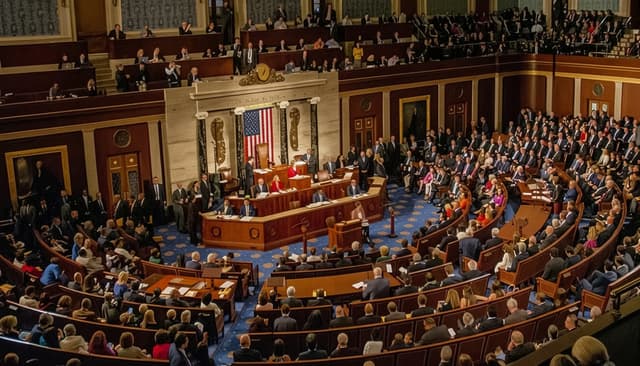
The discussion took place during a US House Financial Services Committee hearing as legislators reviewed the Capital Markets Technology Modernisation Act of 2026 and the broader implications of blockchain-based assets.
“By replacing flawed manual record-keeping processes with more transparent timestamps and stamped records, tokenisation lowers the cost and re-imagines US financial markets,”
Said Blockchain Association, CEO Summer Mersinger.
Executives told lawmakers that tokenised real-world assets, which represent traditional financial instruments on blockchain networks, can reduce settlement times and transaction costs without altering the legal framework governing securities.
Lawmakers raised concerns around compliance, particularly how tokenised systems would enforce know-your-customer checks, anti-money laundering rules, and sanctions requirements across both public and private blockchain networks.
Nasdaq and DTCC representatives said permissioned systems and token-level identifiers could embed compliance directly into the infrastructure, while Plume Network highlighted the ability to freeze tokens to enforce AML measures, although gaps in detecting wash trading remain.
The hearing reflects growing momentum behind tokenisation in capital markets, as regulators seek to balance innovation with investor protection while ensuring financial integrity in increasingly digitised trading systems.