Iran Ceasefire Sparks Huge Market Moves: 3-Minutes MLIV
Anna Edwards, Guy Johnson and Paul Dobson break down today's key themes for analysts and investors on "Bloomberg: The Opening Trade."
Anna Edwards, Guy Johnson and Paul Dobson break down today's key themes for analysts and investors on "Bloomberg: The Opening Trade."
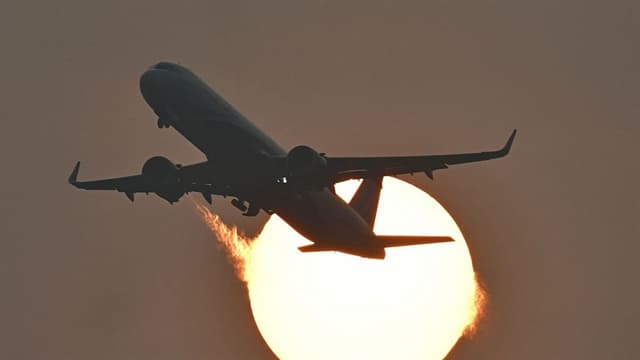
Bloomberg's Benedikt Kammel discusses the impact of the two-week ceasefire between the US and Iran on airlines and the implications for jet fuel prices and air fares.
Henry Allen, Deutsche Bank macro strategist, discusses the implications of the two-week ceasefire between the US and Iran on markets and oil prices. "We're not seeing the data downgrades we saw back in 2022 when Russia invaded Ukraine and oil was up $120 a barrel," Allen tells Bloomberg Television.
The US and Iran have agreed to a two-week ceasefire, in a move that could pause the conflict after six weeks of fighting. But while the deal is expected to halt attacks for now, key issues remain unresolved -- from the opening up of the Strait of Hormuz to broader tensions over Iran's nuclear and missile programs. Mark MacCarley, Retired US Army Major General and Managing Attorney at MacCarley & Rosen spoke to Bloomberg's Horizons Middle East and Africa anchor Joumanna Bercetche on the next steps for the two countries.
Sophie Huynh, portfolio manager and strategist at BNP Paribas Asset Management, reacts to the two-week US-Iran ceasefire announcement and whether the relief rally in markets can be sustained. "How long it's going to take for oil to reach those countries as the Strait of Hormuz potentially opens is, I think, a key question," Huynh tells Bloomberg Television.
Israel's Prime Minister Benjamin Netanyahu says his country supports Iran deal, but ceasefire doesn't include Lebanon. Bloomberg's Dan Williams reports.

For the better part of a decade, the gilded youth of the financial world — the "crypto-native" generation — dismissed gold as a "boomer rock."
To them, the heavy, yellow metal was an analog relic, a petrous souvenir of an era before the lightning-fast efficiency of the blockchain.
International Air Transport Association Director General Willie Walsh expects jet fuel prices to remain elevated for some time. He says it's 'inevitable' that ticket prices will also remain elevated. He speaks with Avril Hong from the sidelines of the 'IATA World Data Symposium' in Singapore.
For decades, the Strait of Hormuz has existed in the global consciousness as a geopolitical abstraction — a narrow, jagged ribbon of blue on a map that experts warned was the "jugular vein" of the modern world.
But as the closure of the Strait enters its second month, that abstraction has curdled into a cold, suffocating reality.
The US and Iran have agreed to a two-week ceasefire in exchange for the reopening of the Strait of Hormuz. The deal buys time for the two sides to reach a longer agreement to end the six-week-old war which has sparked a global energy crisis. Dalia Fahmy, Long Island University's Director of International Relations and Diplomacy & Associate Professor of Political Science spoke to Bloomberg's Horizons Middle East and Africa anchor Joumanna Bercetche on the ceasefire.
For a fleeting moment last autumn, it appeared that the long-running friction between the frantic world of cryptocurrency and the buttoned-down halls of global finance had finally reached a grand synthesis.
With the debut of spot exchange-traded funds (ETFs) and Bitcoin scaling heights near $126,000, the industry’s boosters declared that "digital gold" had finally arrived as a permanent fixture of the modern portfolio.
Bloomberg journalists and former US intelligence adviser Michael Pregent talk about Pakistan and China's back-channel roles in brokering a ceasefire between Iran and US.
_1375928_640x360_2495523395561-640x360.webp&w=3840&q=75)

_1375924_640x360_2495519299821-640x360.webp&w=3840&q=75)

_1375909_640x360_2495519299684-640x360.webp&w=3840&q=75)

_1375903_640x360_2495517251750-640x360.webp&w=3840&q=75)