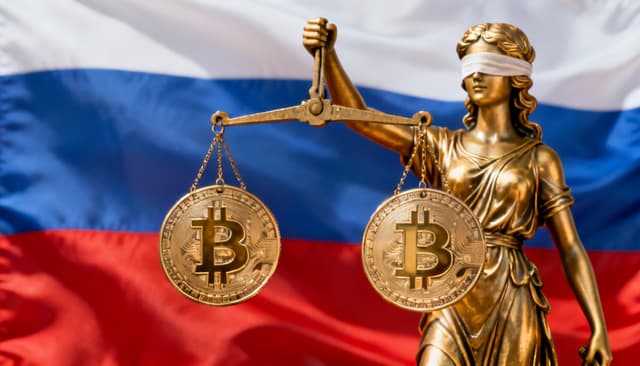

Russia tests crypto trade payments under sanctions
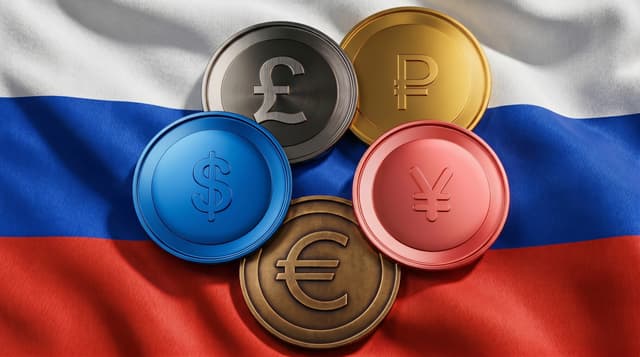
Russia has introduced an experimental legal regime allowing selected exporters and importers to use cryptocurrency for cross-border trade settlements.
Russia has introduced an experimental legal regime allowing selected exporters and importers to use cryptocurrency for cross-border trade settlements.
Cryptocurrency and other digital assets have become a focus of UK national security discussions following allegations that cryptocurrency payments were used to facilitate attacks on properties linked to Prime Minister Keir Starmer.

"Europe has to be at the table," Kulbergs said in an interview with Bloomberg TV on Thursday in Brussels. "There should be one person if the peace talks are in place who has the political mandate to do that."
Russia's Finance Ministry said USD Coin will be added to the country's approved cryptocurrency list alongside Bitcoin (CRYPTO:BTC), Ethereum (CRYPTO:ETH) and Tether.
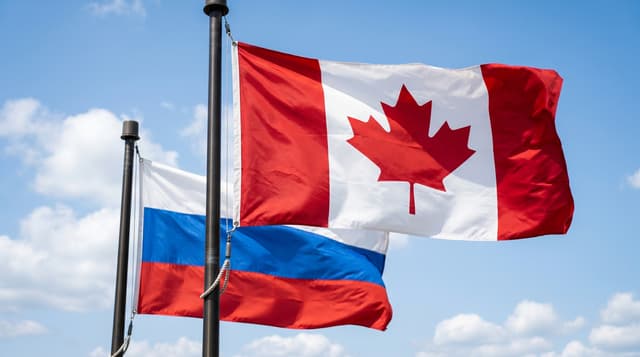
Canada announced sanctions against 162 Russian-linked individuals, organisations and vessels, including crypto platform Grinex, as part of a broader effort to target Russia's financial and export infrastructure.
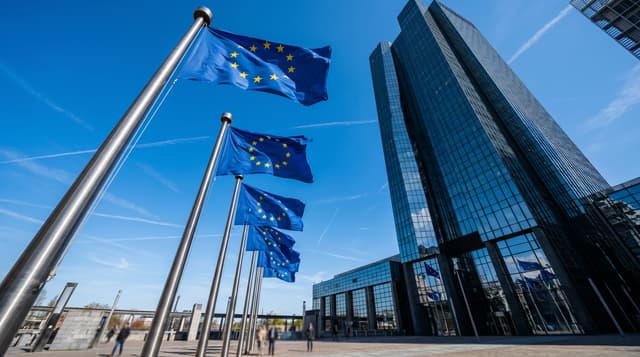
The European Union is preparing to sanction 11 cryptocurrency platforms that it believes have facilitated efforts to bypass international sanctions imposed on Russia.
Russian ruble-backed stablecoin A7A5 has processed more than $110 billion in cumulative onchain transactions despite Western sanctions aimed at restricting its use, according to blockchain security firm CertiK.
Former NATO chief Jens Stoltenberg says the alliance is more prepared for war than it's been in decades. He speaks to Bloomberg News Editorial Lead for EMEA Jackie Simmons at a Bloomberg Newsmakers event in Oslo.
Senior government officials have warned Russian President Vladimir Putin that spending on the war in Ukraine is on an unaffordable path, the most serious sign of internal division in Moscow since the full-scale invasion began. Bloomberg's Tony Halpin reports.
Russian airlines are circumventing US, European Union and UK sanctions by procuring aviation equipment via India, Turkey, the United Arab Emirates and Kazakhstan, among others, a Bloomberg investigation shows. Some spare parts were tracked by serial numbers as they journeyed from Western suppliers to intermediaries to Russian companies. Bloomberg News contacted parties involved in such deals, and several said they would no longer do business with each other or with Russia. Bloomberg's Kate Duffy reports.
_1424044_640x360_2504031811845-640x360.webp&w=3840&q=75)

_1412643_640x360_2502187075781-640x360.webp&w=3840&q=75)
_1412306_640x360_2502151747585-640x360.webp&w=3840&q=75)
_1407524_640x360_2501505603568-640x360.webp&w=3840&q=75)