
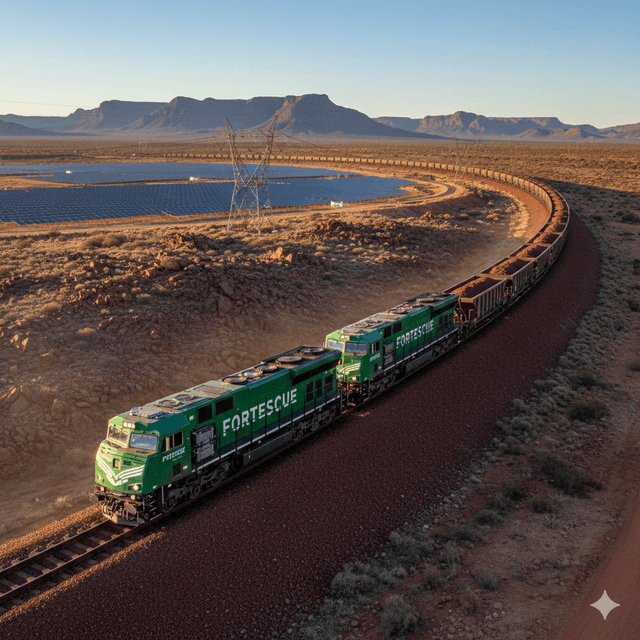

Fortescue (ASX:FMG) has commissioned its first two battery-electric locomotives onto its expansive Pilbara rail network.
The move follows years of secretive trials and strategic pivots, signaling the beginning of the end for the diesel-powered "iron bridge" that connects the miner’s inland hubs to Port Hedland.
Supplied by Caterpillar’s Progress Rail, these locomotives are titans of green technology, housing 14.5MWh batteries—the largest land-mobile units in existence.
The units are expected to recover 40% to 60% of their energy through regenerative braking during the journey.
The initial deployment aims to slash diesel consumption by one million liters annually; however, this is just the vanguard of a massive transition for a rail operation that currently "guzzles" 80 million liters per year.
The locomotives will draw power from a growing solar portfolio, including the operational 100MW North Star Junction farm and the upcoming 644MW Turner River Project.
"The commissioning of these locomotives demonstrates that heavy-haul rail can operate reliably without fossil fuels," stated Metals CEO Dino Otranto, emphasising that the company’s 480km of high-voltage transmission lines are the backbone of this 24/7 green energy shift.
While rivals BHP and Rio Tinto progress with their own Wabtec trials, Fortescue remains the most aggressive, targeting "Real Zero" by 2030.
The rail milestone complements a massive US$3.5 billion procurement spree for zero-emission Liebherr trucks, XCMG loaders, and Epiroc drills.
At the time of reporting, Fortescue's share price was $21.72.