
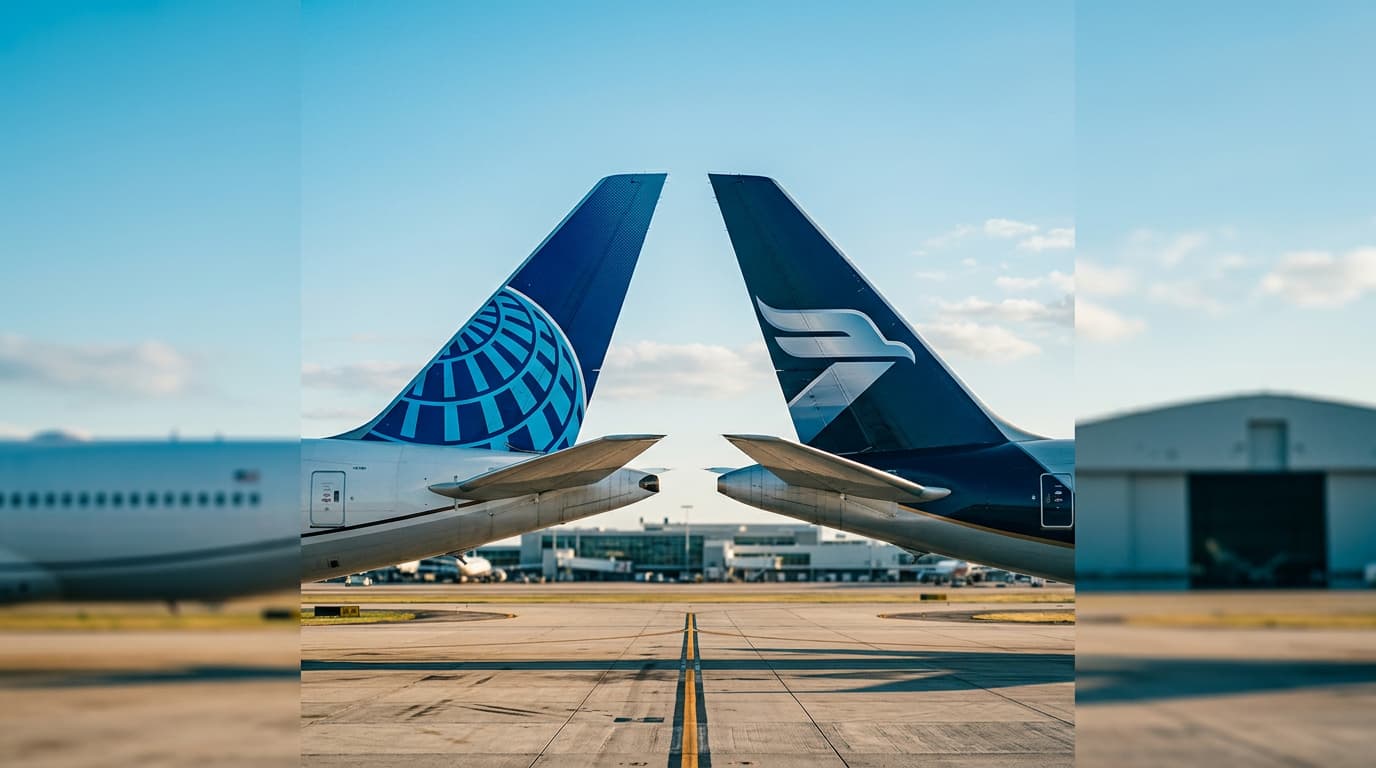
United, American Airlines shares climb after report of Kirby floating merger to Trump

Shares of United Airlines Holdings (NYSE:UAL) and American Airlines Group (NASDAQ:AAL) rose in premarket trading on Tuesday following reports that United CEO Scott Kirby privately pitched a potential merger of the two carriers to U.S. President Donald Trump in February.
The proposal, if pursued, would represent the most significant consolidation of the U.S. airline industry in more than a decade.
American Airlines shares jumped approximately 4% in early trading, while United rose around 2%.
The stock gains provide a brief reprieve for the carriers, both of which have seen double-digit declines over the past several weeks.
The sector has been under heavy pressure since late February, when the outbreak of a conflict between the U.S.-Israeli alliance and Iran sent global jet fuel prices soaring.
Since the start of the conflict, American Airlines shares has plunged 14.1% and United has slumped 10.4%.
Kirby reportedly raised the idea of the "mega-merger" during a February 25 meeting at the White House.
While the scheduled agenda was focused on the future of Washington’s Dulles International Airport, sources familiar with the matter told Reuters that Kirby used the conclusion of the session to argue for the strategic benefits of a combined entity.
The United chief executive argued that a merged carrier would be better positioned to compete on the international stage.
Kirby has long maintained that foreign carriers control a majority of long-haul seat capacity to and from the U.S., despite the fact that a majority of those passengers are American citizens.
By combining forces, Kirby suggested the U.S. would have a national champion capable of clawing back global market share.
Despite the early market enthusiasm, industry officials and antitrust experts cautioned that any formal attempt at a merger would face overwhelming regulatory hurdles.
A combination of two of the "Big Four" carriers would fundamentally reshape the domestic landscape, likely sparking intense opposition over concerns regarding reduced competition, higher airfares, and potential job losses.
Critics also pointed to the significant route overlap at major hubs, which has historically been a non-starter for Department of Justice antitrust reviews.