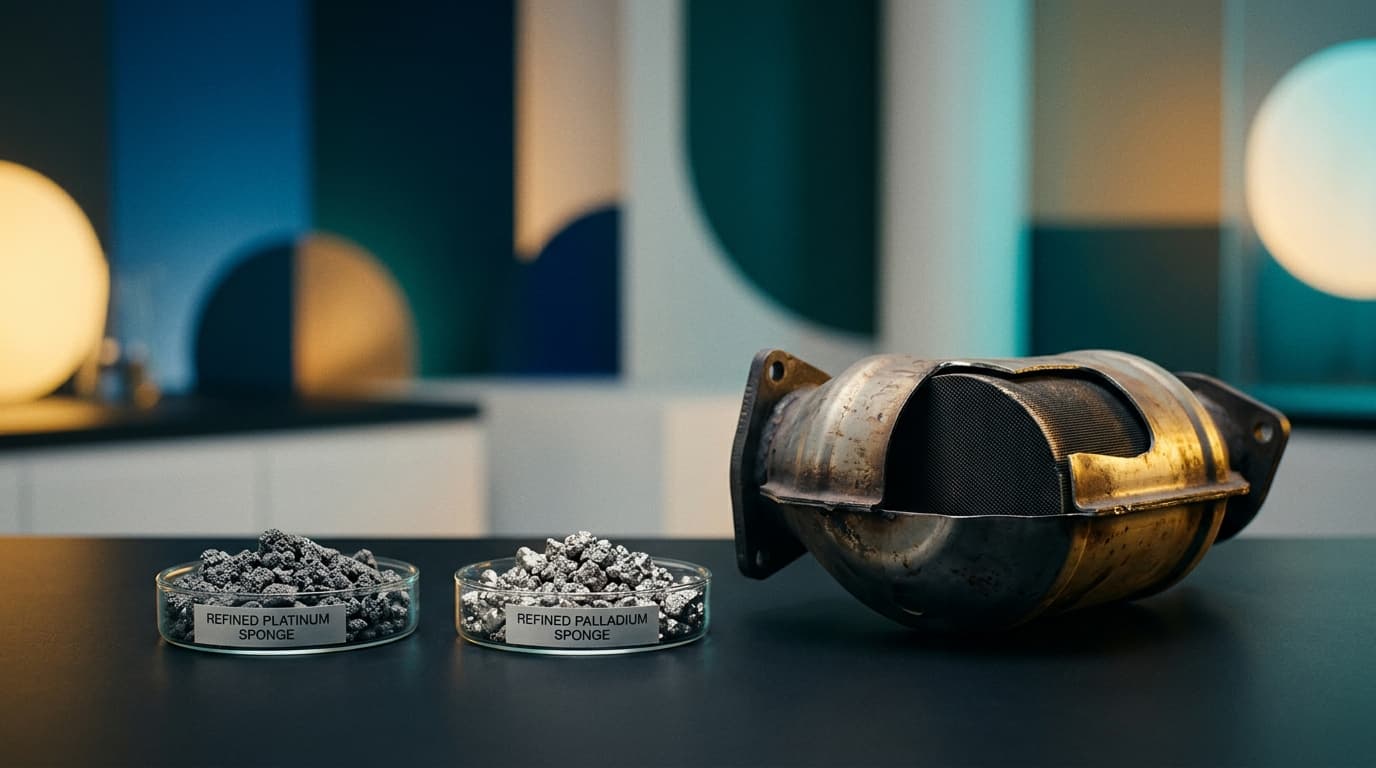
Lifezone Metals achieves first PGM production from recycled catalytic converters

Lifezone Metals (NYSE:LZM) has announced the first successful production of platinum, palladium, and rhodium from U.S.-sourced spent automotive catalytic converters, marking a technical milestone for its proprietary Hydromet Technology.
The production comes after an extensive 24-month testing campaign involving 1,179 locked-cycle and pilot batch tests on one ton of recycled material.
According to data released by Chief Executive Officer Chris Showalter and Chief Technology Officer Dr. Mike Adams, the company’s hydrometallurgical process demonstrated recovery rates exceeding 99% for platinum and palladium, and 95% for rhodium.
The company is now targeting final metal purities of more than 99.95% for platinum and palladium as it optimizes its refining flow sheet.
The success of the pilot program is intended to inform the design criteria for a planned commercial-scale precious metals refinery in the United States.
Unlike traditional pyrometallurgical smelting, which relies on high-heat furnaces, Lifezone’s Hydromet Technology is an aqueous-based processing route.
The company claims the method is significantly cleaner, producing lower carbon dioxide emissions and zero sulfur dioxide emissions, while offering a shorter production pipeline that reduces working capital requirements.
The project is being developed with the ongoing support of Glencore, which has invested $1.5 million for a 6% stake in the venture.
Under the current agreement, the global commodities giant maintains an option to fund 50% of the project’s total capital requirements.
With the engineering design and feasibility studies nearing completion, Lifezone expects to reach a final investment decision on the commercial plant by the second quarter of 2026.