
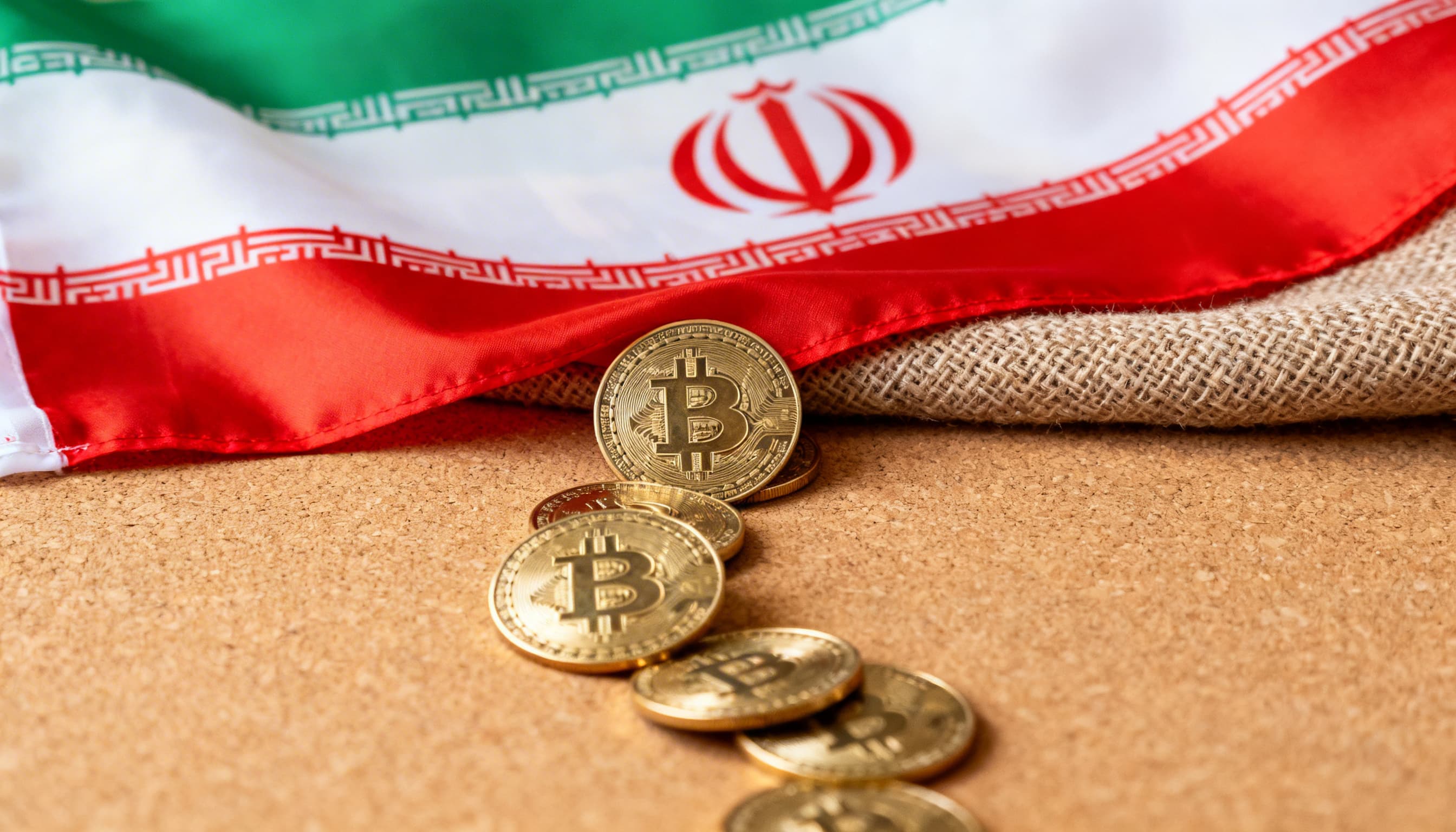
Crypto payments to Iran raise sanctions risk for shippers

Shipping companies that consider using cryptocurrency to pay potential transit fees to Iran could face serious sanctions exposure, according to blockchain intelligence experts.
Kaitlin Martin, senior intelligence analyst at Chainalysis, warned that any payments directed to the Iranian regime may be viewed as material support under existing international sanctions rules.
Such transactions, especially those linked to passage through strategic waterways, could place firms at risk of breaching restrictions imposed by the United States and other jurisdictions.
"Doing so could carry significant sanctions violation risk, as the Iranian Revolutionary Guard Corps is sanctioned by multiple jurisdictions and Iran is subject to comprehensive sanctions by the United States,"
Kaitlin Martin said.
The warning follows reports suggesting that Iran may be exploring the use of cryptocurrency to collect transit-related fees from vessels moving through vital maritime routes.
Although no formal policy has been announced by Tehran, the reports have intensified concerns across global shipping and compliance sectors.
US President Donald Trump has also publicly stated that he would oppose any attempt by Iran to impose tolls on commercial shipping in the region.
Analysts noted that Iran has already widened its use of digital assets, particularly stablecoins, to support trade involving oil, weapons, and other commodities.
Public blockchain data suggests that these digital currencies have increasingly been used to move funds outside the traditional banking system.
Despite this, experts stressed that cryptocurrency does not offer a guaranteed way to avoid sanctions enforcement.
Blockchain transactions create a permanent and transparent record, making them easier for investigators to trace than many conventional financial channels.
Martin explained that digital asset transfers often leave clear trails that authorities can follow to exchanges and cash-out points where funds may be frozen or seized.
"In many ways, cryptocurrency is actually easier to trace than traditional methods of sanctions evasion,"
Kaitlin Martin said.
The report also highlighted that other sanctioned nations have pursued similar strategies to support cross-border trade.
Russia, for example, has reportedly relied on digital tokens such as A7A5 following the sanctions introduced after its 2022 invasion of Ukraine.
At the same time, Iran’s Bitcoin mining activity has declined sharply over the past quarter amid rising geopolitical tensions with both the United States and Israel.
The country’s hashrate reportedly fell by around 7 exahashes per second, dropping to approximately 2 EH/s.
Even with the sharp decline inside Iran, the wider Bitcoin network has remained stable, with global hashrate staying close to 1,000 EH/s.
Neighbouring countries, including the United Arab Emirates and Oman, have so far shown no similar disruption in mining activity.
The development has added another layer of uncertainty to an already tense regional and financial landscape.