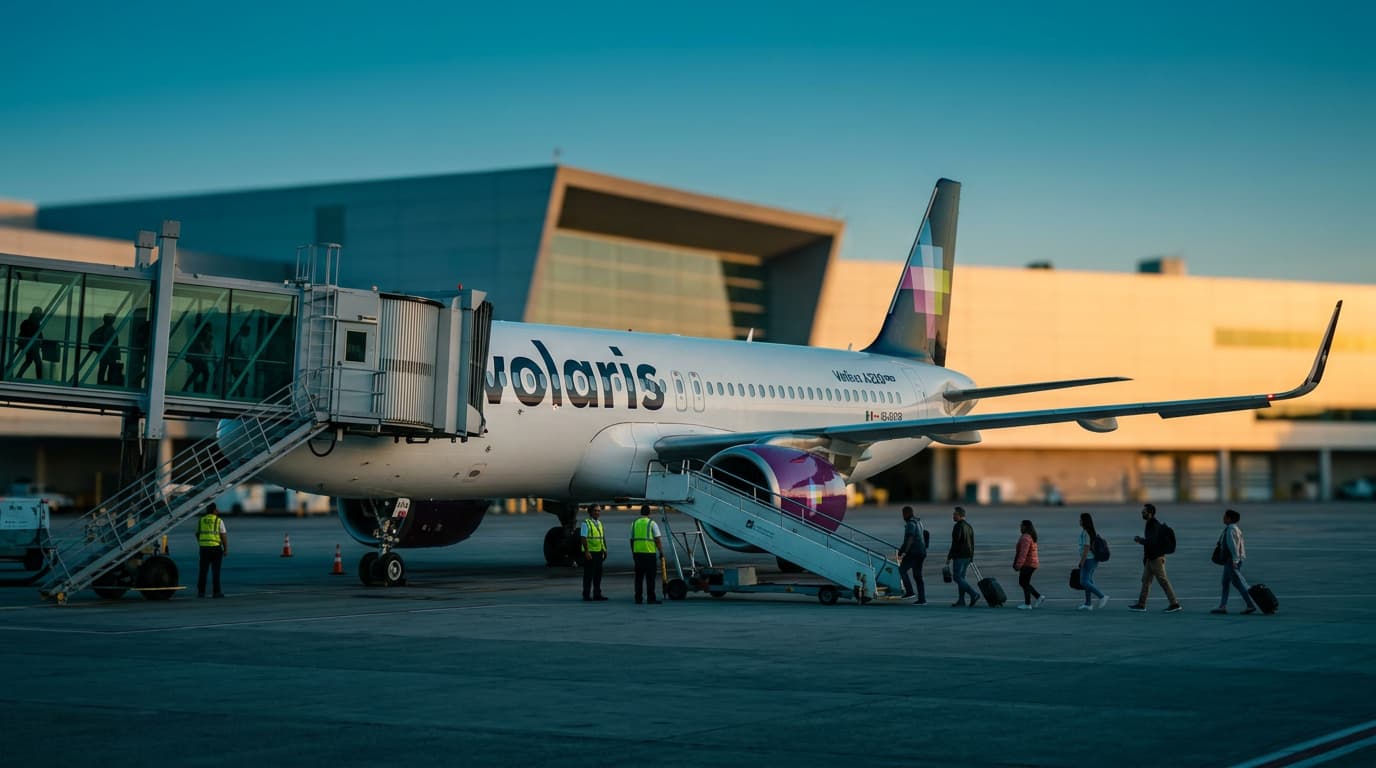
Volaris navigates cost pressures in Q1 despite double-digit revenue growth

Volaris (NYSE:VLRS), Mexico’s ultra-low-cost carrier, reported its financial results for the first quarter of 2026 on Tuesday, April 28.
The airline saw a significant 13.6% increase in total operating revenues, reaching $770 million, driven by robust passenger demand.
However, the top-line growth was offset by a net loss of $71 million, or $0.62 per ADS, as the company grappled with rising unit costs and operational challenges.
EBITDAR for the quarter stood at $177 million, a 12.8% decrease compared to the same period last year.
This contraction was largely due to an increase in operating expenses per available seat mile (CASM), which rose to 8.85¢, up 12.4% year-over-year.
Even excluding fuel, CASM ex-fuel jumped 11.9% to 6.04¢, reflecting higher labor costs and the continued impact of aircraft maintenance cycles.
Despite the quarterly loss, Volaris maintains a stable liquidity position.
The company ended the quarter with $766 million in cash and short-term investments, representing 24.5% of its last twelve months' (LTM) revenue.
The fleet reached a total of 155 aircraft, with 66% of the fleet now comprised of fuel-efficient "NEO" models, supporting the airline’s long-term goal of fleet modernization and fuel efficiency.
Meanwhile, Volaris refrained from providing full-year 2026 guidance, citing ongoing market volatility and the timing of engine inspections.
However, for the second quarter of 2026, the airline expects capacity (ASM) to be flat to up 2%, with total revenue per available seat mile (TRASM) projected at approximately 9.50¢.