
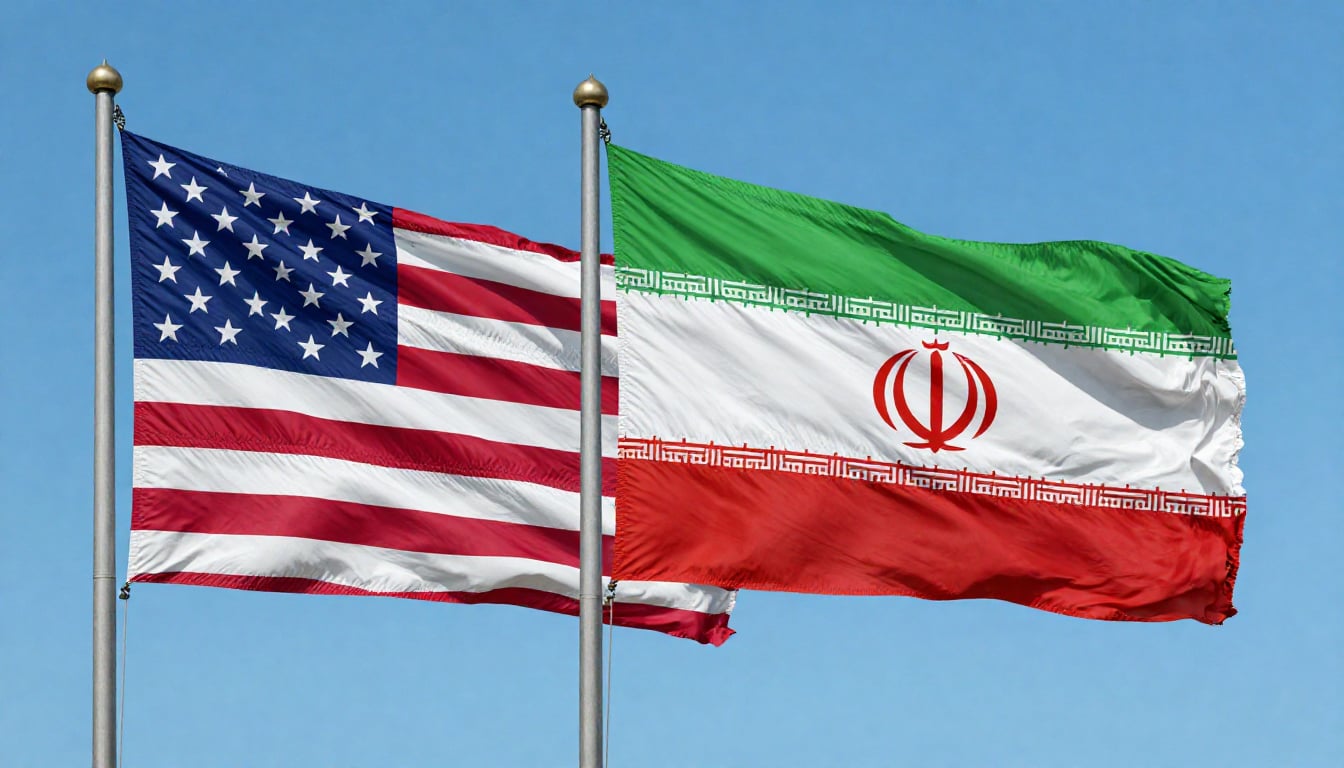

The United States and Iran agreed to a two-week ceasefire on Tuesday evening following an urgent diplomatic intervention led by Pakistan, easing fears of an immediate escalation in the five-week conflict.
The breakthrough came just hours before President Donald Trump’s self-imposed 8pm Eastern deadline for possible military strikes on Iran’s power plants and bridges.
Earlier in the day, the US president had warned of severe consequences if Tehran failed to comply, raising international concern over the risk of a broader regional war.
Reports had indicated that B-52 bombers were already heading towards Iranian airspace before the ceasefire was confirmed.
By the evening, however, Pakistan’s Prime Minister Shehbaz Sharif had successfully pushed for a temporary halt in hostilities to allow diplomatic talks to continue.
Trump confirmed the pause in a public statement, linking the agreement to Iran’s commitment to fully and safely reopen the Strait of Hormuz.
“Subject to the Islamic Republic of Iran agreeing to the COMPLETE, IMMEDIATE, and SAFE OPENING of the Strait of Hormuz, I agree to suspend the bombing and attack of Iran for a period of two weeks,”
Donald Trump said.
The Strait of Hormuz remains one of the world’s most critical energy corridors, handling roughly one-fifth of global oil and gas shipments.
Iran’s Foreign Minister Abbas Araghchi later confirmed Tehran’s acceptance of the temporary ceasefire arrangement.
“For a period of two weeks, safe passage through the Strait of Hormuz will be possible via coordinating with Iran’s Armed Forces,”
Abbas Araghchi said.
The agreement is expected to restore movement through the strategic waterway, where shipping traffic had sharply declined during the conflict.
Trump also signalled optimism that the two-week window could lead to a broader peace framework based on a 10-point proposal submitted by Tehran.
He stated that negotiations during the pause may allow both sides to finalise a longer-term armistice and reduce tensions across the Middle East.
The ceasefire is also expected to include Israel, with reports indicating that Israeli officials have agreed to suspend military actions once the blockade ends.
The sudden reversal marks a dramatic shift after weeks of intensified military exchanges and repeated threats from both sides.
Iranian officials at the United Nations had earlier condemned Washington’s warnings, describing them as dangerous and unlawful.
“Iran will not stand idle in the face of such egregious war crimes,”
Amir-Saeid Iravani said.
The UN also reiterated that attacks on civilian infrastructure remain prohibited under international law.
Before the ceasefire was announced, Israeli strikes reportedly hit bridges, rail lines, and power facilities across several Iranian cities, causing casualties and widespread outages.
At the same time, US forces reportedly targeted dozens of military sites on Iran’s Kharg Island, a major oil export hub.
Iran’s Revolutionary Guards also launched retaliatory strikes on Saudi Arabia’s Jubail petrochemical complex following attacks on Iranian industrial facilities.
The temporary truce now offers a narrow but crucial opportunity for diplomacy to prevent further disruption to global energy markets and regional stability.