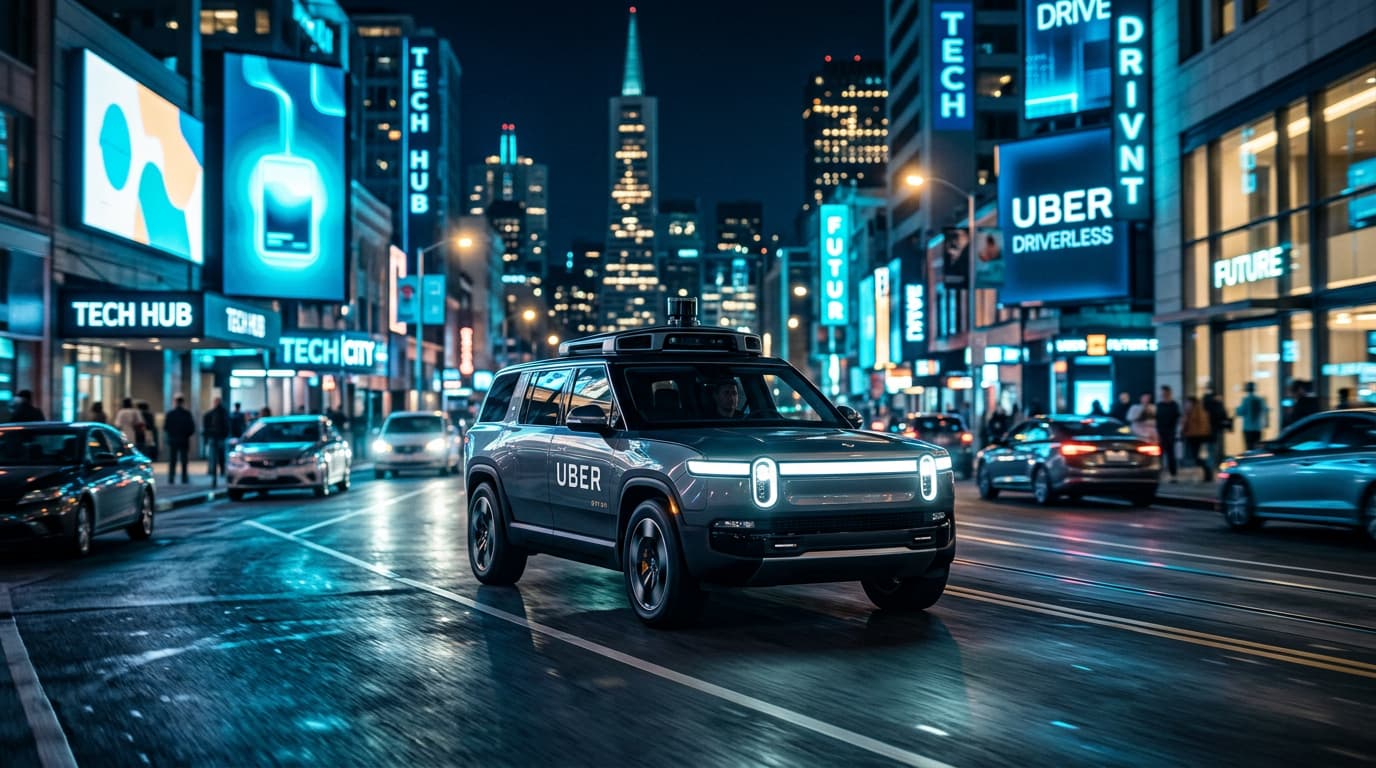
Uber and Autobrains partner with Nvidia to launch Munich robotaxi fleet

Uber Technologies (NYSE:UBER) and Israel-based autonomous vehicle technology developer Autobrains announced on Monday a joint initiative to launch a commercial robotaxi program in Munich, marking an expansive push to scale autonomous ride-hailing infrastructure across Europe.
The software and transit deployment is being executed in collaboration with U.S. chipmaker Nvidia (NASDAQ:NVDA).
The partnership will integrate Uber’s established international passenger mobility network with Autobrains’ "agentic AI" autonomous driving system, running entirely on the software-defined Nvidia Drive Hyperion computing architecture.
Pending necessary regulatory approvals from regional authorities, Munich will serve as the initial launch and deployment city for the automated fleet.
The participating companies stated that the program is explicitly engineered to move driverless transit options beyond isolated, single-city pilot projects.
The venture aims to establish a fully "OEM-agnostic" operating model, meaning the core autonomous software framework is designed to function across multiple vehicle manufacturing platforms and varied urban markets rather than being restricted to a single proprietary fleet model.
The core technology behind the rollout shifts away from conventional automated setups.
Autobrains' system breaks the operational demands of driving into a series of highly specialized, independent decision-making agents.
By addressing environmental variables through these decentralized components, the system is designed to formulate safe, real-time driving responses while relying on standard automotive sensor configurations rather than requiring exotic or highly specialized custom hardware.
The selection of the Bavarian capital matches accelerating regional investments in automated transport.
Munich has quickly emerged as a primary testing ecosystem for next-generation autonomous mobility, supported by Germany’s evolving legal frameworks for Level 4 autonomy.
The deployment tracks directly with corporate targets detailed by Uber last year, when the San Francisco-based ride-hailing leader first flagged its strategic intention to initiate self-driving operations in Munich starting from 2026.