
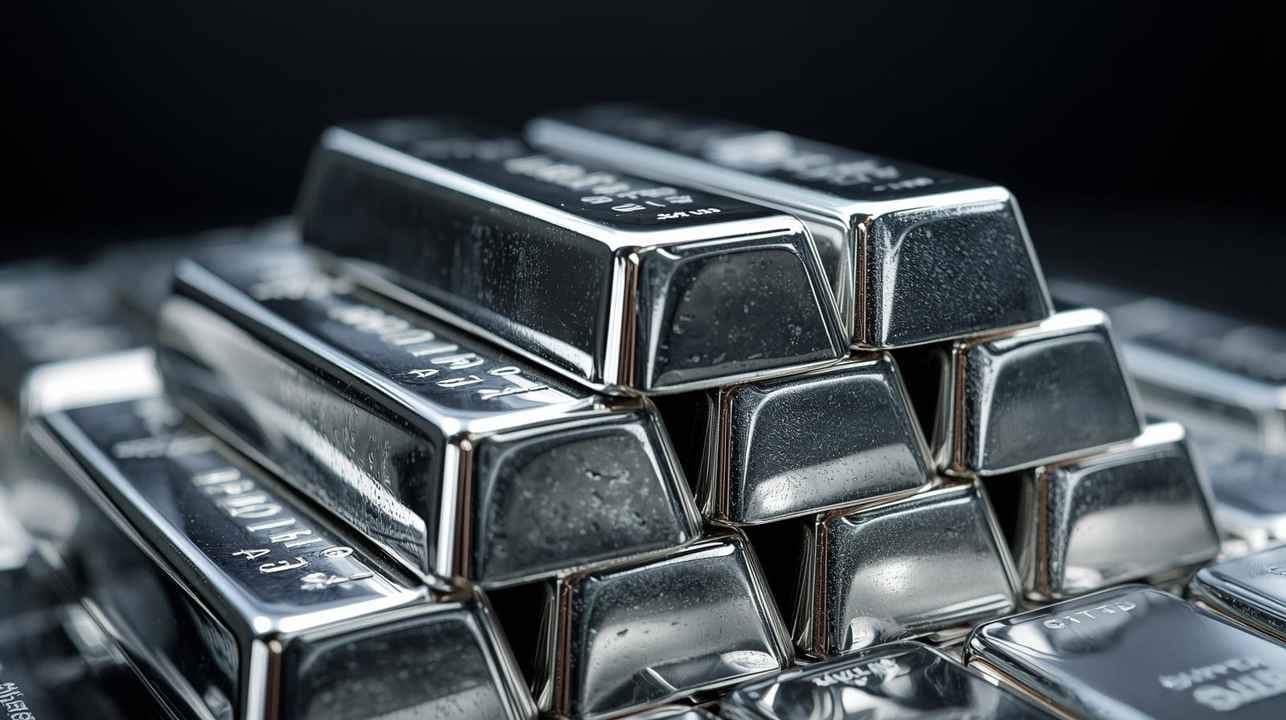
Silver surges to record highs as Fed pivot reignites hard-asset demand

Silver has climbed into record territory, signalling renewed investor anxiety over inflation, monetary credibility and the long-term impact of shifting US monetary policy.
The rally has unfolded alongside a sharp reassessment of risk as market participants rotate capital towards tangible assets amid growing doubts over fiat stability.
Economist and long-time precious metals advocate Peter Schiff said the move reflects a decisive breakout rather than a short-term price spike.
Schiff linked the surge directly to the Federal Reserve’s latest policy shift, arguing that easing financial conditions at a fragile moment has amplified inflation risks.
The Federal Reserve cut its benchmark interest rate by 25 basis points on Dec. 10 to a target range of 3.5% to 3.75% while also ending its programme of quantitative tightening.
According to Schiff, the combination of lower rates and renewed balance-sheet expansion has undermined confidence in monetary restraint.
“Silver is at a record high, gold is up over $70, less than $30 away from hitting a new record high,” Peter Schiff said.
He pointed to rising bond yields as evidence that investors are demanding higher compensation for inflation and policy uncertainty rather than embracing easier money.
“Yields on long-term Treasuries are rising. The 10-year yields 4.19% and the 30-year yields 4.85%. This confirms that the Fed’s recent rate cut and return to QE are policy mistakes,” Peter Schiff said.
Long-dated US government bonds continued to sell off, pushing yields higher despite the Fed’s pivot towards accommodation.
The 10-year US Treasury yield traded near 4.186%, while the 30-year yield hovered around 4.849%, reinforcing concerns over future price pressures.
Schiff argued that the bond market’s reaction highlights a widening gap between central bank intentions and investor expectations.
He said the renewed use of quantitative easing has triggered a reallocation away from paper assets and into traditional stores of value.
“Now that QE is back, gold and silver are off to the races,” Peter Schiff said.
Schiff contrasted the metals rally with the performance of digital assets, suggesting that capital flows have favoured physical scarcity over speculative alternatives.
“The Fed’s return to QE launched an exodus out of dollars into gold and silver. But there was no exodus into bitcoin, which sold off even more than the dollar,” Peter Schiff said.
Analysts note that silver’s appeal is strengthened by its dual role as both a monetary metal and a critical industrial input.
Persistent supply constraints, combined with rising industrial demand, have tightened the market as prices accelerate.
Schiff has repeatedly maintained that silver is structurally undervalued relative to gold and broader inflation dynamics.
He concluded that the current trend reflects a deeper loss of faith in monetary discipline rather than speculative excess.
“The silver train can’t be stopped,” Peter Schiff said.