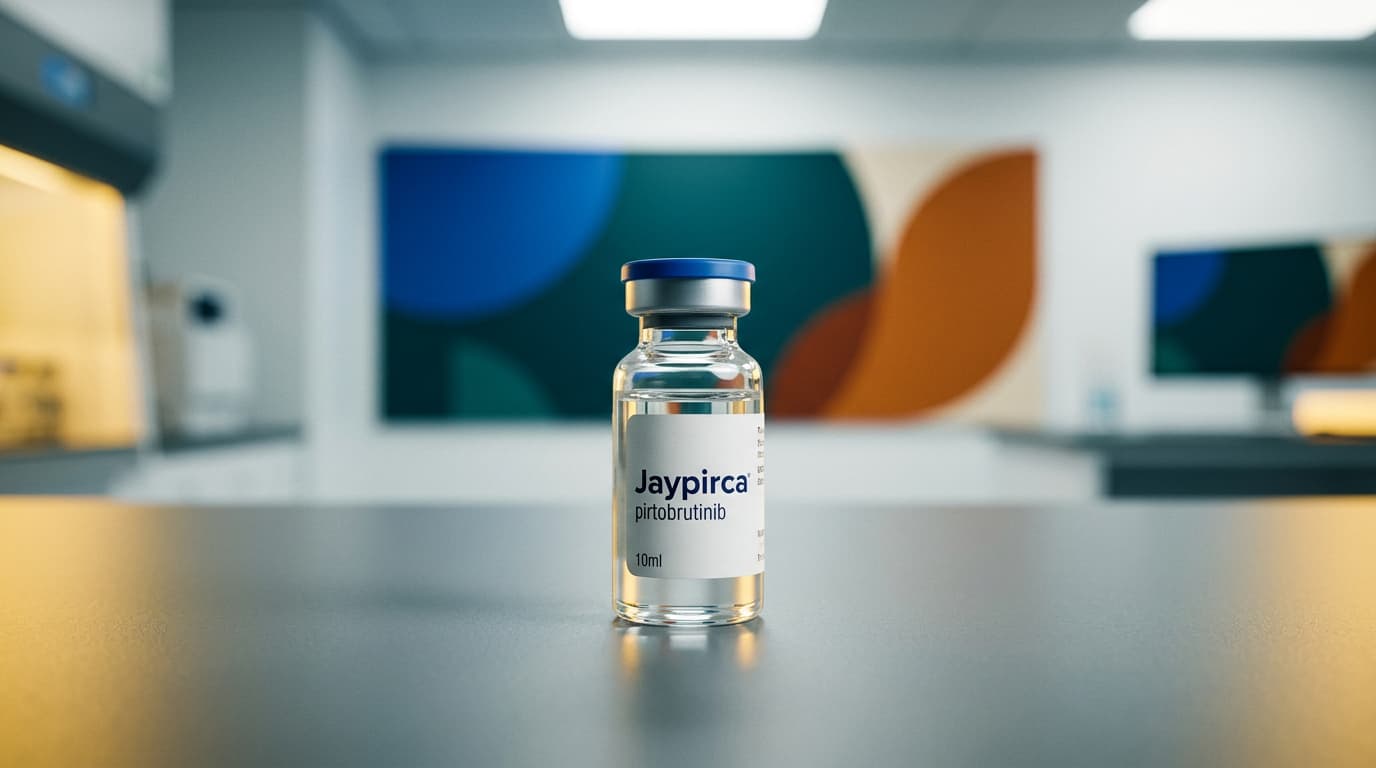
Lilly’s Jaypirca combination significantly delays progression in relapsed CLL

Eli Lilly and Company (NYSE:LLY) announced Monday that its Phase 3 BRUIN CLL-322 trial achieved its primary endpoint, demonstrating that the addition of Jaypirca (pirtobrutinib) to a standard regimen of venetoclax and rituximab significantly extended the time patients lived without their disease worsening.
The study focused on patients with relapsed or refractory chronic lymphocytic leukemia (CLL) or small lymphocytic lymphoma (SLL).
The combination therapy produced a statistically significant and clinically meaningful improvement in progression-free survival (PFS) compared to the control arm of venetoclax and rituximab alone.
Crucially, the efficacy of the Jaypirca triplet remained consistent across all analyzed subgroups.
This included patients who had previously been treated with covalent BTK inhibitors—a group that often faces limited options once initial therapies fail.
While data for overall survival remain immature at this stage, the company noted that the current trend favors the Jaypirca-inclusive arm.
Meanwhile, the safety profile of the triplet was consistent with the known individual profiles of the three agents.
Investigators reported that discontinuation rates due to adverse events were low and comparable between both the experimental and control arms, suggesting the intensified regimen is well-tolerated.
Jaypirca, which already holds accelerated approval for certain CLL/SLL patients who have received at least two prior lines of therapy, is a key asset in Lilly’s oncology portfolio.
The success of the BRUIN CLL-322 trial is expected to support a move into earlier lines of treatment.