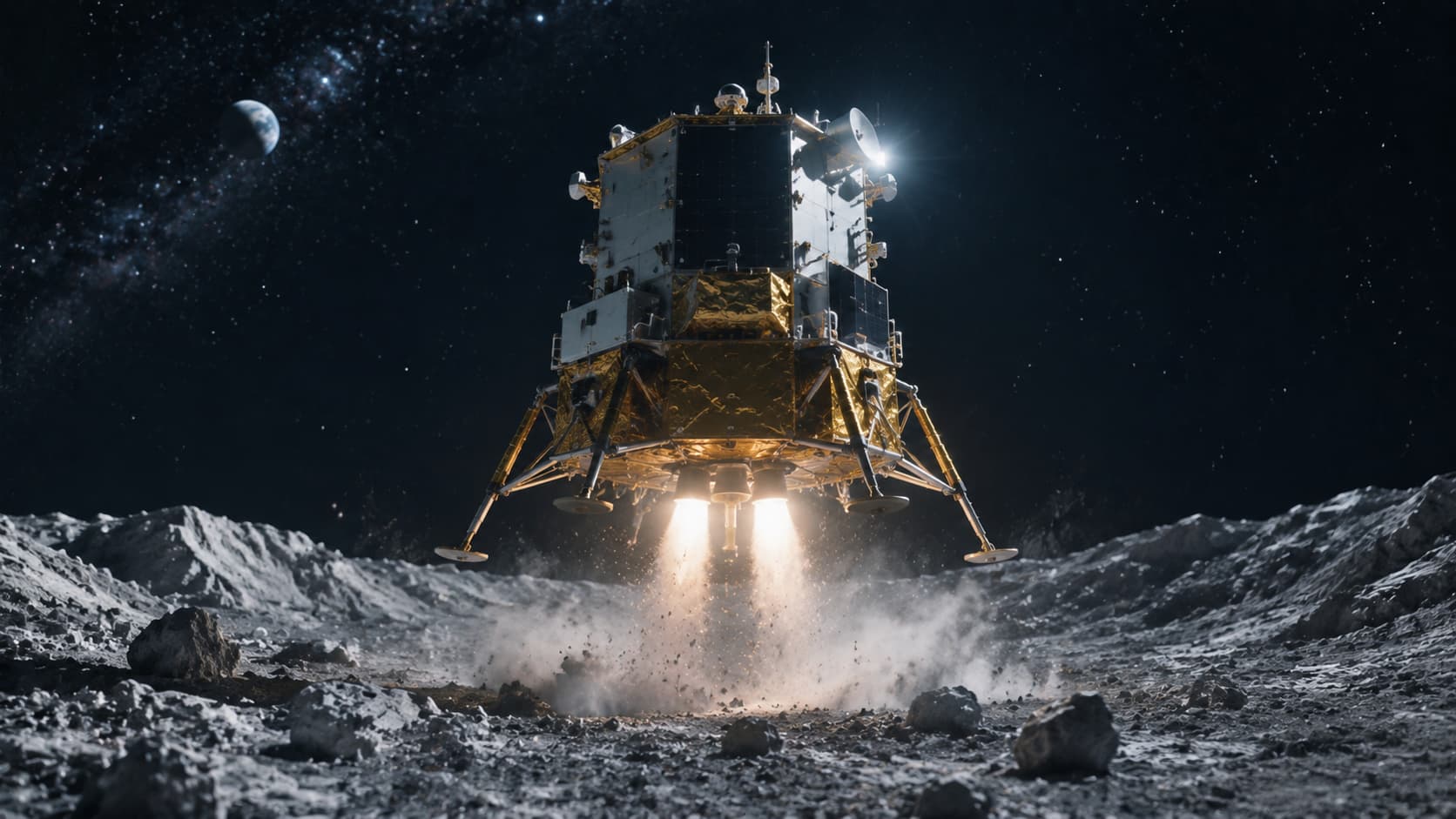
Intuitive Machines revenue triples as Lanteris integration transforms growth

Intuitive Machines (NASDAQ:LUNR) reported record-breaking first-quarter results on Thursday, signaling its transition from a specialized lunar landing firm into a scaled aerospace prime contractor.
The Houston-based company saw revenue nearly triple compared to the prior year, fueled by its landmark acquisition of Lanteris Space Systems and a flurry of new multi-million dollar NASA awards.
Intuitive Machines announced that revenue for the quarter ended March 31, 2026, surged to $186.7 million, up from $73.1 million in the first quarter of 2025.
The explosive growth follows the January completion of its $800 million acquisition of Lanteris Space Systems (formerly Maxar Space Systems), a move that has provided the company with established satellite manufacturing capabilities and a massive expansion of its addressable market.
The company reached a significant financial milestone by reporting positive adjusted EBITDA of $2.7 million for the quarter.
While the aerospace sector often faces long lead times for profitability, Intuitive Machines’ performance was bolstered by high-margin work across its OMES (Operations Services and Engineering) and NSNS (Near Space Network Services) contracts, alongside its core Commercial Lunar Payload Services (CLPS) missions.
Contracted backlog reached an all-time high of $1.1 billion, a staggering $842 million increase since the end of 2025.
The company’s momentum continued into the second quarter with the signing of a definitive agreement to acquire Goonhilly Earth Station and its COMSAT subsidiary, which will further solidify its Space Data Network by providing continuous deep-space communication coverage.
Reflecting this trajectory, Intuitive Machines issued aggressive full-year 2026 revenue guidance of $900 million to $1 billion.
The outlook assumes continued success in its upcoming lunar missions, including the recently awarded $180.4 million IM-5 mission, which will be the first CLPS task order to utilize the company’s larger Nova-D cargo-class lander.