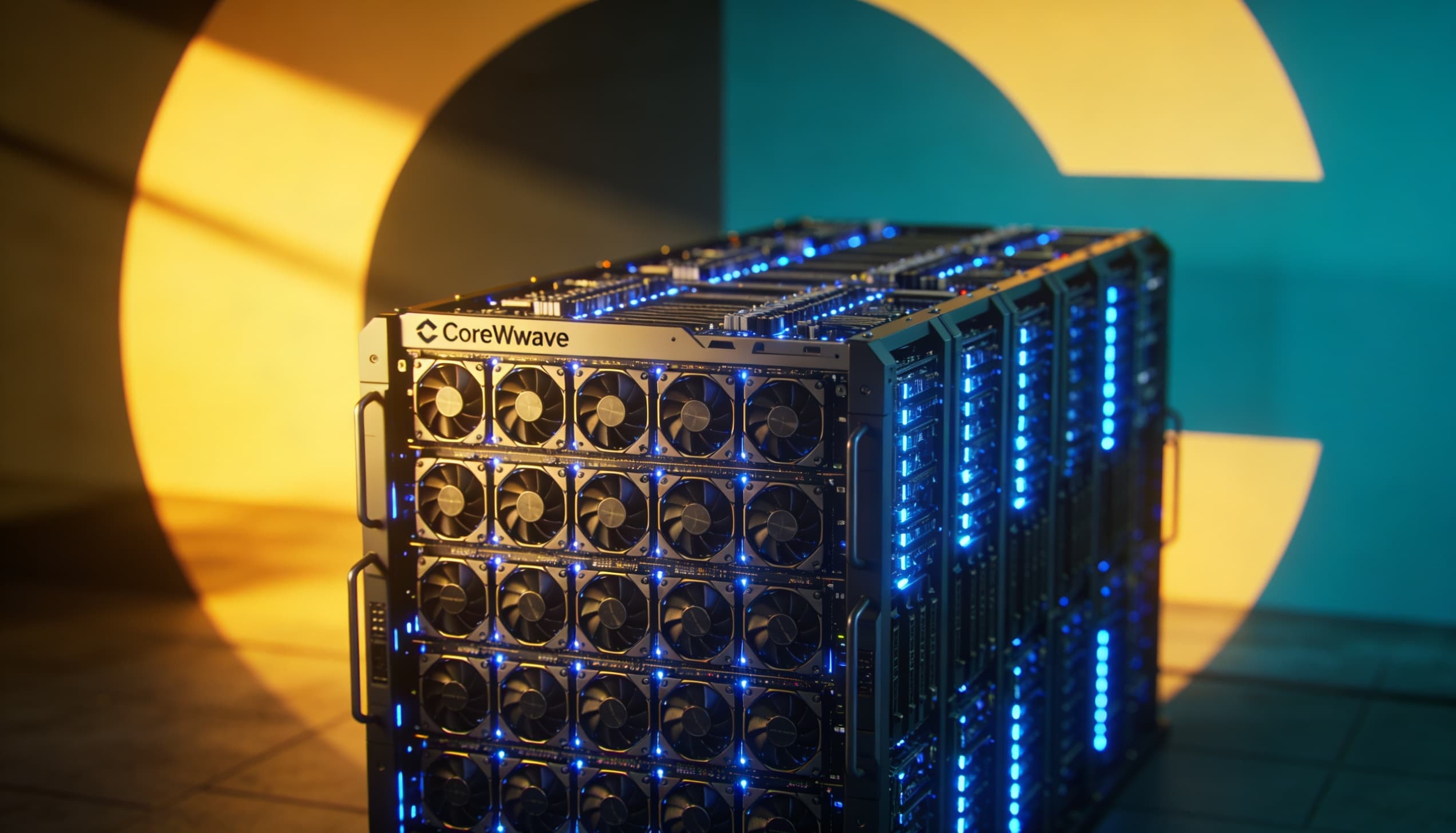
CoreWeave revenue surges 112% as AI cloud backlog approaches $100B

CoreWeave (NASDAQ:CRWV) delivered a quarter of "unprecedented demand" for its AI-native cloud platform, reporting first-quarter 2026 results that saw revenue more than double year-over-year.
The Roseland, New Jersey-based company, which describes itself as "The Essential Cloud for AI," posted net revenue of $2.08 billion for the period ended March 31, 2026, a 112% increase compared to $982 million in the first quarter of 2025.
The surge was driven by what CEO Michael Intrator described as the strongest bookings quarter in the company's history.
CoreWeave’s remaining performance obligations—its revenue backlog—soared to nearly $100 billion, providing multi-year visibility as the industry shifts from AI model training to large-scale inference.
This backlog was bolstered by high-profile multi-billion dollar infrastructure commitments from AI pioneers including Meta, Anthropic, and Jane Street.
While the top line saw hypergrowth, the company’s heavy investment in physical infrastructure impacted the bottom line.
CoreWeave reported a GAAP net loss of $740 million, or $1.40 per share, compared to a loss of $315 million in the prior year.
The widening loss reflects the massive capital expenditures required to bring new data centers online; the company surpassed 1 gigawatt (GW) of active power capacity during the quarter and is targeting 8 GW by 2030.
On a non-GAAP basis, adjusted EBITDA rose to $1.16 billion, up from $606 million a year ago.
However, adjusted EBITDA margin compressed to 56% from 62% as the company accelerated the deployment of new GPU clusters.
Adjusted operating income was $21 million, as CoreWeave navigated the "lowest margin point" of its 2026 deployment cycle before newly active clusters reach full utilization.
Operationally, the company is now larger than the 15 largest neo-clouds across North America and Europe combined.
Its full-stack platform, which integrates networking, orchestration (CoreWeave Kubernetes Service), and storage, has become a primary alternative for AI labs unable to secure sufficient capacity from legacy cloud providers.