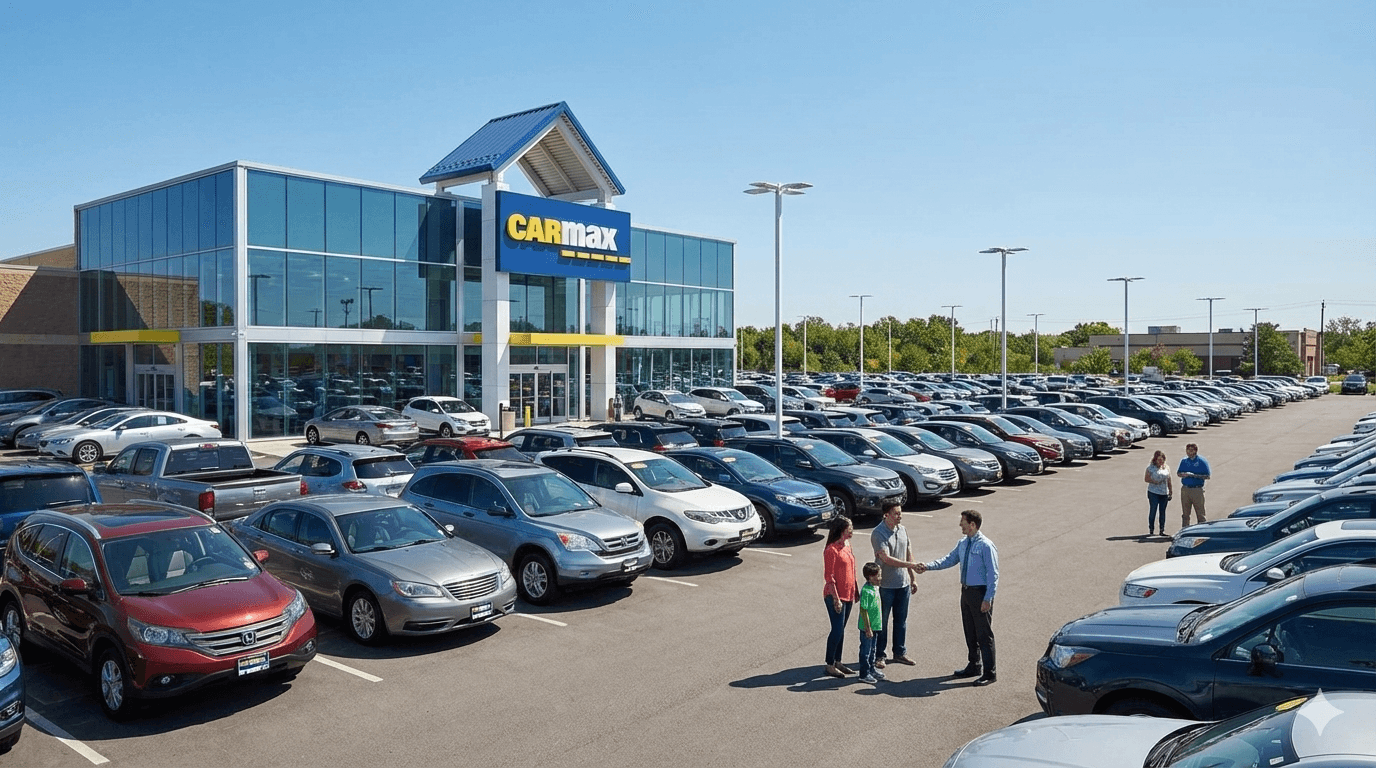
CarMax posts Q4 loss on goodwill impairment, increases cost-cutting targets

CarMax (NYSE:KMX) reported a net loss for the fourth quarter of fiscal year 2026, as the used-car giant navigated a significant non-cash impairment charge and intensified its restructuring efforts.
Despite a slight uptick in total unit sales, the company faced pressure on retail margins and comparable store performance.
For the quarter ended February 28, 2026, CarMax reported a net loss of $0.85 per diluted share, a sharp reversal from the $0.58 profit recorded in the same period last year.
The bottom line was heavily impacted by two specific items: a $0.99 per share non-cash goodwill impairment and $0.20 per share in restructuring charges.
Excluding these one-time costs, adjusted net earnings per diluted share stood at $0.34.
Combined retail and wholesale unit sales reached 303,969, a marginal increase of 0.7% year-over-year.
However, the retail segment showed signs of localized cooling; retail used unit sales fell 0.8%, while comparable store used unit sales—a key industry metric—declined 1.9%.
Gross profit per retail unit also retreated to $2,115, down $207 from the previous year’s record fourth quarter, as the company implemented strategic pricing actions to stimulate consumer demand.
In response to the challenging environment, CarMax increased its targeted SG&A (selling, general, and administrative) reduction goal.
The company now aims for $200 million in exit rate savings by the end of fiscal year 2027, up from its previous target of $150 million.
Adjusted SG&A expenses were already down 5.4% in the fourth quarter when excluding restructuring costs.
Meanwhile, the company's wholesale division provided a modest bright spot, with units increasing 3%, although gross profit per unit in this segment also dipped by $105 to $940.
On the procurement side, CarMax bought 270,000 vehicles during the quarter, with a 2.5% increase in vehicles sourced directly from consumers.
Elsewhere, CarMax Auto Finance (CAF) saw its income decrease 9.8% to $143.7 million.
Management attributed the decline to a lower balance of outstanding loans following a $900 million non-prime securitization in the third quarter, alongside an increased provision for loan losses as the firm expands its "full spectrum" lending capabilities.
The company also confirmed it has paused its share repurchase program after buying back $50.4 million in stock earlier in the fiscal year.
Frequently asked questions
More from United States
Eli Lilly declares $1.73 fourth-quarter dividend
Gildan completes $490 million HanesBrands Australia sale
Cemex Q3 revenue increases 8% to $4.59 billion
MakeMyTrip Q2 revenue rises 2.5% but misses estimates
Citizens Community Q3 earnings jump to $0.56 per share
XTEND AI Robotics projects $26.5 million revenue