Canadian Solar revenue hits high end as company appoints new CEO

Canadian Solar (NASDAQ:CSIQ) reported first-quarter revenue that reached the upper limit of its guidance, bolstered by a significant tariff refund and record-setting growth in its battery storage division.
The results coincided with a major leadership transition as the company pivots toward high-value U.S. manufacturing to combat a global downturn in solar module pricing.
Canadian Solar announced that net revenues for the first quarter of 2026 reached $1.1 billion, a 10% decline year-over-year but at the top end of its $900 million to $1.1 billion forecast.
While the company posted a net loss of $32 million, or $0.71 per share, gross margins surged to 25.1%.
This margin expansion was significantly aided by a $93 million non-recurring anti-dumping and countervailing duty (AD/CVD) refund.
The company shipped 2.5 GW of solar modules during the period, exceeding its own projections.
However, the standout performer was the e-STORAGE segment, which delivered a record 2.1 GWh of battery energy storage solutions—a 142% increase compared to the same period last year.
In a move to strengthen its operational leadership, the board appointed Colin Parkin as Chief Executive Officer, effective immediately.
Parkin, who previously served as President and led the company's successful storage division, succeeds founder Dr. Shawn Qu.
Dr. Qu will transition to the roles of Executive Chairman and Chief Technology Officer, focusing on long-term strategy and the company's HJT (heterojunction) technology roadmap.
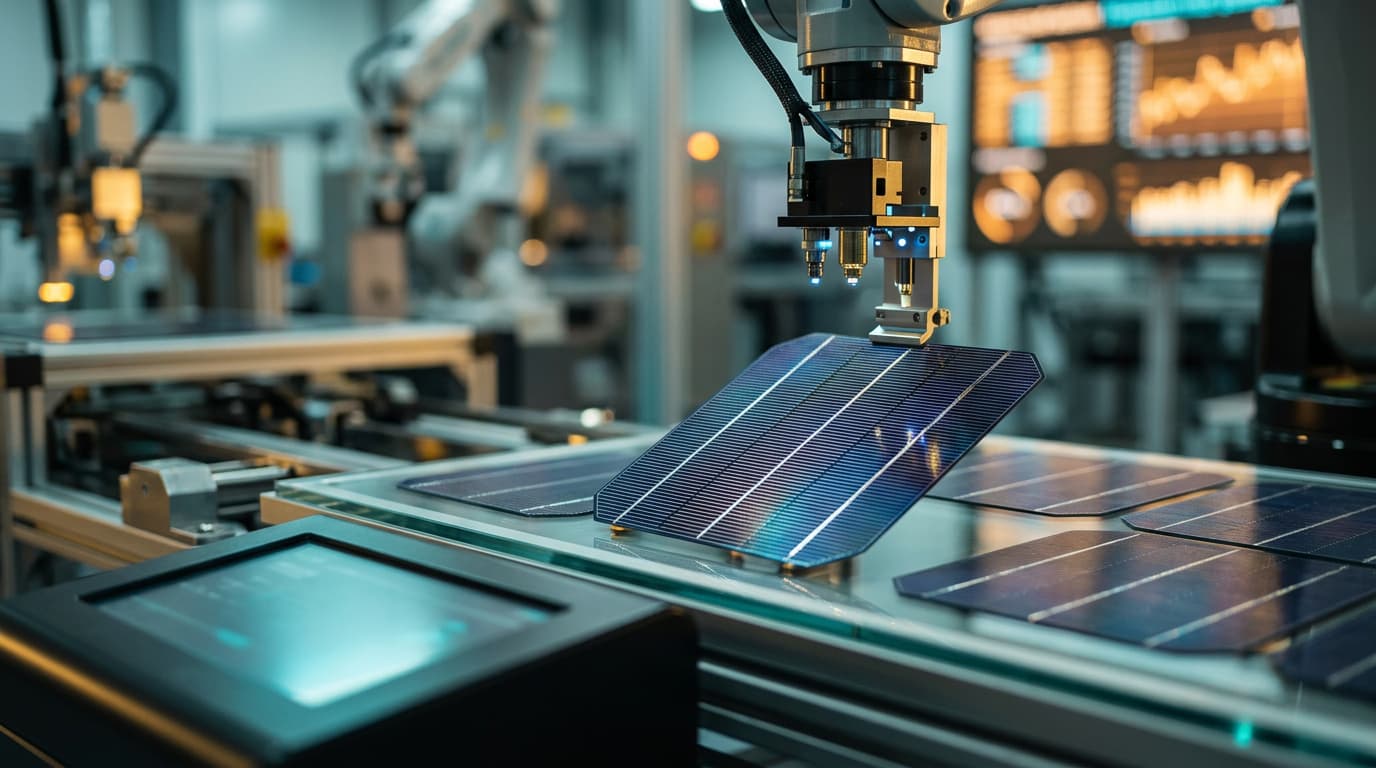
On the manufacturing front, Canadian Solar confirmed that trial production has commenced at its flagship 5 GW solar cell facility in Jeffersonville, Indiana.
The plant is a cornerstone of the company’s strategy to domesticate its supply chain in the United States and capitalize on Inflation Reduction Act incentives.
Commercial operations at the site are expected to begin in July 2026.
Looking ahead to the second quarter, Canadian Solar issued revenue guidance of $1 billion to $1.2 billion.
Gross margins are expected to normalize between 13% and 15% as the one-time benefit of the tariff refund subsides and the company continues to navigate a volatile global pricing environment for solar components.