Boston Scientific coronary catheter meets targets in pivotal trial

Boston Scientific (NYSE:BSX) announced that the pivotal clinical trial for its investigational SEISMIQ 4CE Coronary Intravascular Lithotripsy (IVL) Catheter met its primary safety and effectiveness endpoints, clearing a major hurdle for regulatory submission.
The Marlborough, Massachusetts-based medical device manufacturer presented data from the prospective, single-arm FRACTURE IDE trial during a late-breaking session at the EuroPCR 2026 congress in Paris.
The study evaluated 420 patients with severely calcified coronary artery disease across 46 global sites in the United States and Europe.
The trial recorded a 93.3% rate of freedom from 30-day major adverse cardiac events (MACE), outperforming the pre-specified performance benchmark of 86.2%.
The primary effectiveness endpoint demonstrated a 93.7% rate of procedural success, defined as successful stent deployment with a final residual blockage of less than 50% and no in-hospital MACE.
This surpassed the trial's target goal of 85.8%.
Severe arterial calcification complicates roughly one-third of all percutaneous coronary intervention procedures, presenting risks such as incomplete stent expansion or vessel tears.
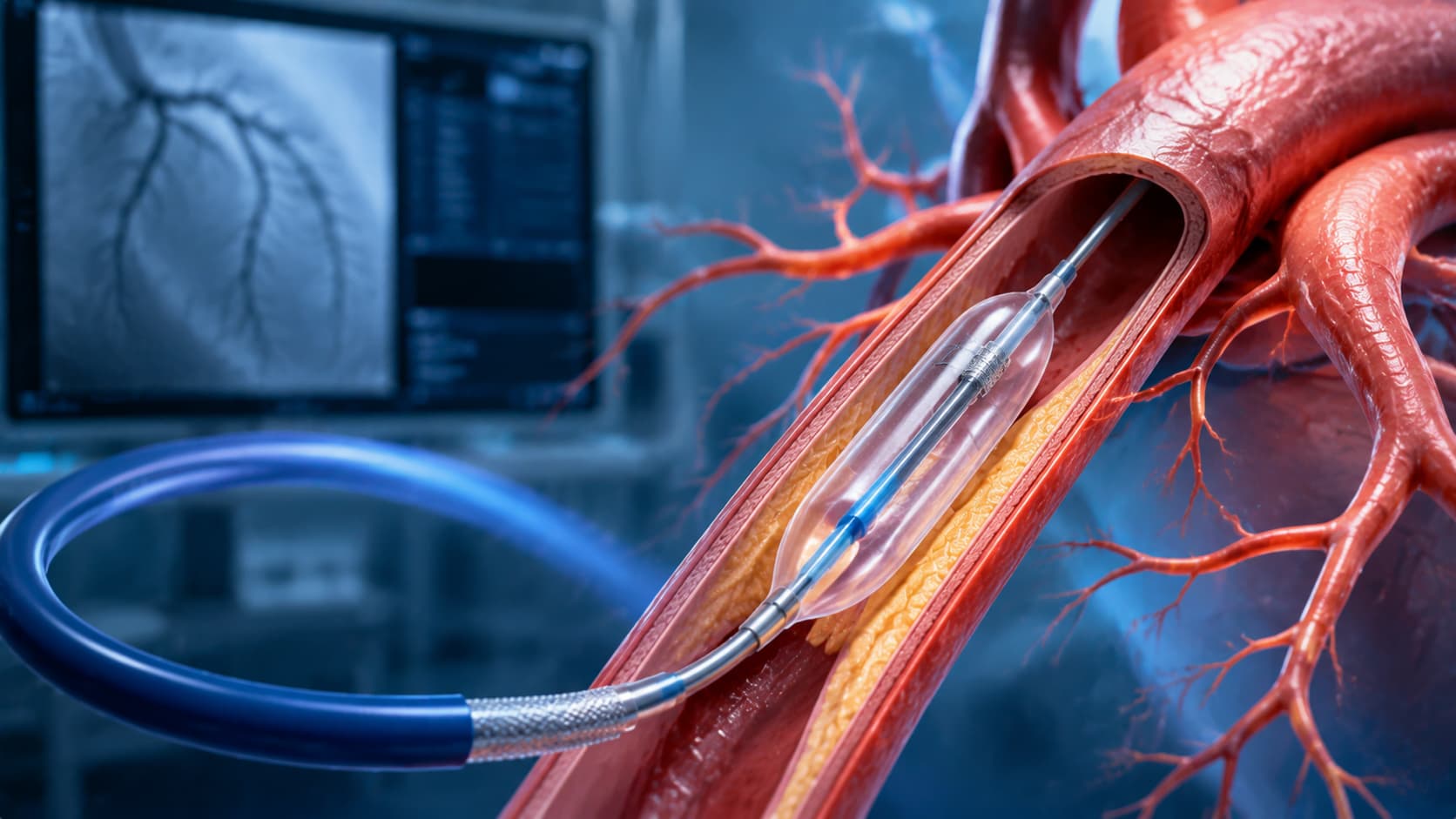
The SEISMIQ 4CE catheter is designed to address this by utilizing laser energy inside a specialized balloon to produce acoustic pressure waves, fracturing the hardened calcium at low pressure to safely prep the vessel.
Data from the trial showed a 100% success rate for stent delivery across all treated patients, with a 94.2% average stent expansion rate recorded at the most heavily calcified segment of the target arteries.
The investigational coronary device utilizes the same equipment console as Boston Scientific's peripheral IVL version, which secured U.S. Food and Drug Administration clearance in 2025.
Management intends to leverage these clinical outcomes to anchor its upcoming regulatory application for commercial approval of the coronary catheter.