BETA Technologies reports $10.1M in revenue as net loss widens on R&D scale-up

BETA Technologies (NYSE:BETA) posted total revenue of $10.1 million for the first quarter ended March 31, 2026, a 5% increase over the prior-year period.
Revenue was heavily weighted toward service-related contracts, which contributed $9.2 million, while product sales accounted for $0.9 million.
The company reported a net loss of $122.3 million for the quarter, largely driven by $138.8 million in operating expenses as BETA scales its workforce and manufacturing infrastructure for commercial production.
Research and development remains the primary driver of capital allocation, totaling $91.7 million in the quarter.
This figure includes $5.6 million in non-cash warrant expenses tied to a collaborative agreement with GE Aerospace to develop hybrid-electric turbogenerators.
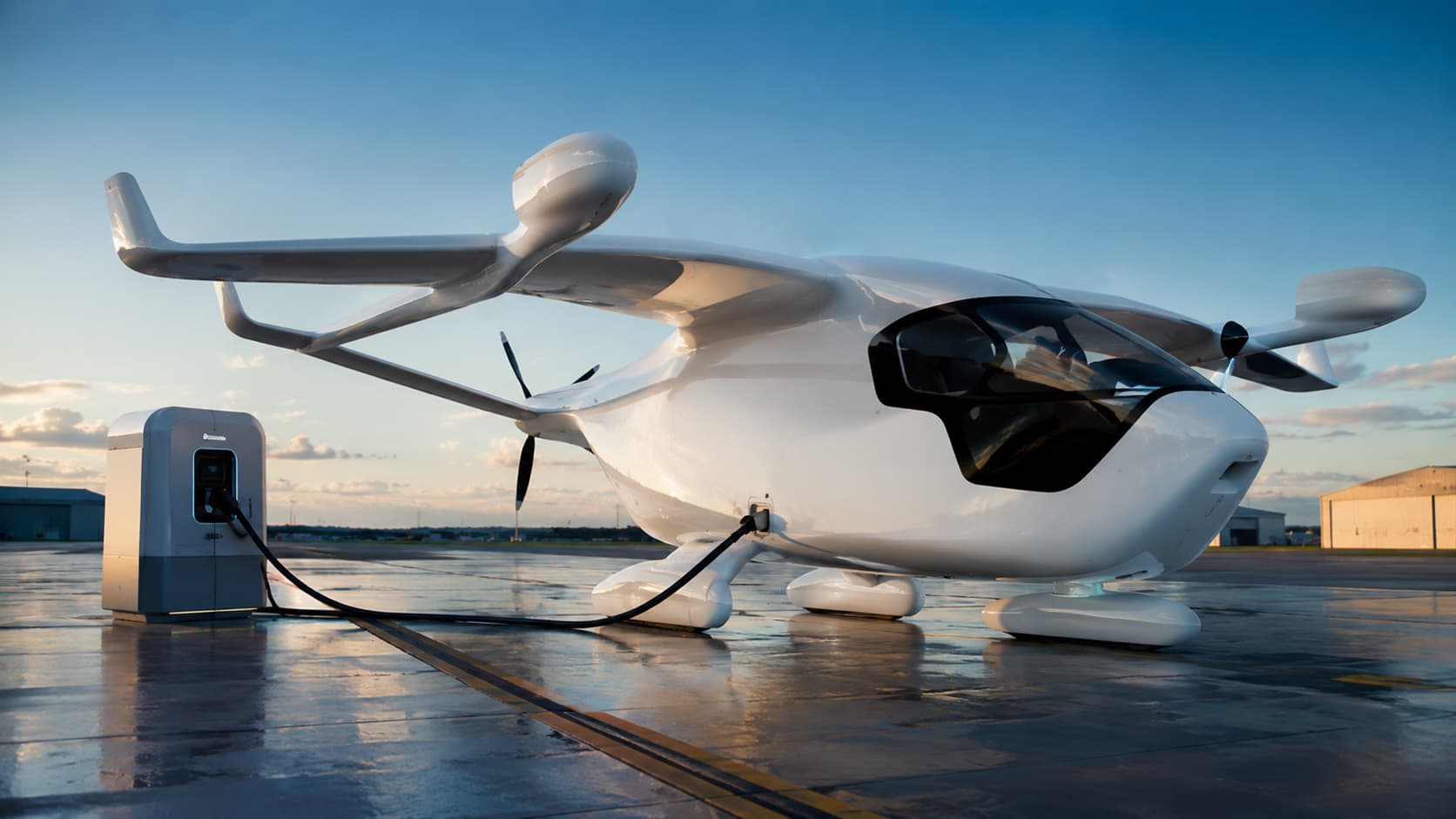
These investments are designed to support the dual-track certification of the ALIA CX300 (conventional takeoff) and the ALIA A250 (vertical takeoff), with the CX300 currently targeting FAA type certification by late 2026.
Following its successful IPO and previous private financing rounds, BETA ended the quarter with $1,589.4 million in cash and cash equivalents.
This represents a massive increase from the $236.6 million held a year ago, significantly de-risking the company's path to commercialization.
Capital expenditures rose to $24.2 million during the quarter, reflecting the expansion of its production facilities and the "Charge" electric charging network, which is being deployed to support future fleet operations.
Looking ahead, BETA reaffirmed its full-year 2026 revenue guidance of $39 million to $43 million while updating its adjusted EBITDA outlook to a range of ($355) million to ($445) million.
The company’s growth is underpinned by a robust backlog of 991 aircraft worth approximately $3.9 billion.
Notably, BETA was selected to participate in seven of the eight FAA eVTOL Integration Pilot Programs (eIPP), a dominant showing that allows the company to conduct pre-certified revenue-generating cargo operations as early as the second half of 2026.
Management noted that while the current net losses are substantial, they are consistent with the capital-intensive nature of certifying new aerospace categories.
With more than 125,000 nautical miles flown by its ALIA fleet and a launch partnership with Surf Air Mobility for passenger operations, BETA is positioning its high-performance electric platform as a leading contender in the transitioning regional logistics and medical transport markets.