

Australian unemployment holds steady amid full-time surge

The Australian labour market maintained its steady posture through the end of the first quarter, with the seasonally adjusted unemployment rate holding firm at 4.3% in March.
Fresh data released by the Australian Bureau of Statistics paints a picture of a resilient workforce shifting towards more traditional, full-time roles.
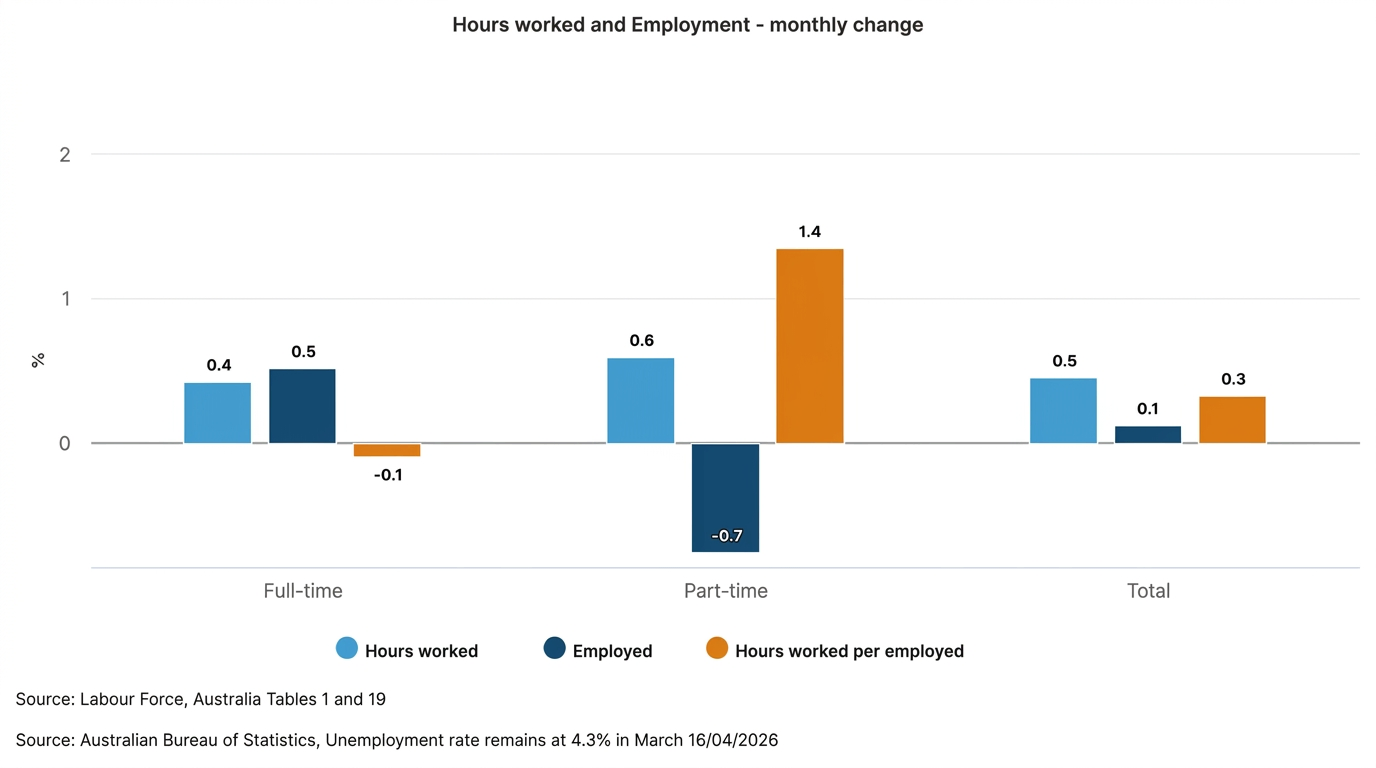
According to Sean Crick, ABS head of labour statistics, the month saw a net gain of 18,000 employed persons, underpinned by a surge of 53,000 full-time workers.
The growth was distributed across genders, with full-time positions for men and women rising by 29,000 and 24,000, respectively.
However, the gains were tempered by a 35,000-person decline in the part-time sector, causing the overall participation rate to dip slightly to 66.8%.
Productivity also saw a notable uptick, with total hours worked increasing by 9.2 million—a 0.5% rise.
While part-time headcounts fell, those remaining in those roles worked 1.4 per cent more hours on average than in February.
"Annually, the number of hours worked grew faster at 2% than employment, which grew at 1.4%," Crick noted, highlighting a trend of intensified labour output.
Looking ahead, the ABS is embarking on a modernisation of its labour force survey. Starting in April, a new digital infrastructure will be rolled out to streamline data collection.