Australian aviation costs rise as jet fuel jumps

- Australian domestic airlines are increasing airfares and reducing seat capacity on certain routes due to elevated global jet fuel prices.
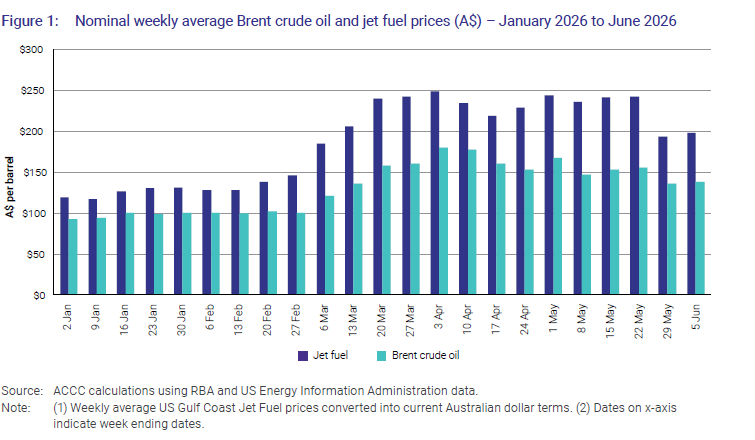
- Jet fuel prices rose by more than 40% between mid-February and early June, creating severe cost pressures across the domestic aviation sector.
- Qantas and Virgin Australia expect to recover these additional expenses by raising ticket prices and adjusting flight schedules, according to revised company forecasts.
The Australian Competition and Consumer Commission stated that Qantas (ASX:QAN) and Virgin Australia (ASX:VGN) have reduced or suspended multiple domestic services and increased some airfares in response to a 40% surge in jet fuel prices between February and June.
The new development follows a period of stable demand where domestic airlines carried around 5 million passengers in both March and April, supported by major holiday events.
“Higher jet fuel prices are driving significant changes in how airlines operate, including reducing or suspending services and increasing fares on some routes,” said ACCC Commissioner Anna Brakey.
To manage the financial pressure, Virgin Australia implemented a fare increase of approximately 5% across domestic economy and business services since March, while Qantas has not publicly disclosed the specific size of its price adjustments.
Airlines are aiming to recover at least some of these rising costs by adjusting fares and capacity over the coming months. Following the announcement, the Qantas share price was unchanged at $6.20.
Despite the recent price hikes, the industry average on-time arrival rate improved significantly to 82.9% in April, marking the highest reliability performance level recorded since February 2022.
The broader domestic aviation sector remains highly concentrated, with Qantas and Virgin Australia operating 98.5% of all domestic passenger flights across the country.
Frequently asked questions
More from Australia
Iluka Resources reports Q3 production jump to 76kt
Star Entertainment faces $260M penalty for anti-money laundering failures
Amplitude Energy secures 15 petajoule gas licence
Sea Forest reports 67% quarterly revenue increase
Frasers declares Accent Group 65-cent offer final
SciDev secures $8M in new chemistry contracts