

Australia's population reaches 27.7M residents

Australia's population rose to 27.7 million people, marking a 1.6% annual increase according to the latest data released by the Australian Bureau of Statistics.
The figures, covering the 12-month period ended September 2025, reveal a nation in a state of steady expansion, driven primarily by a rebound in overseas arrivals and a consistent natural increase.
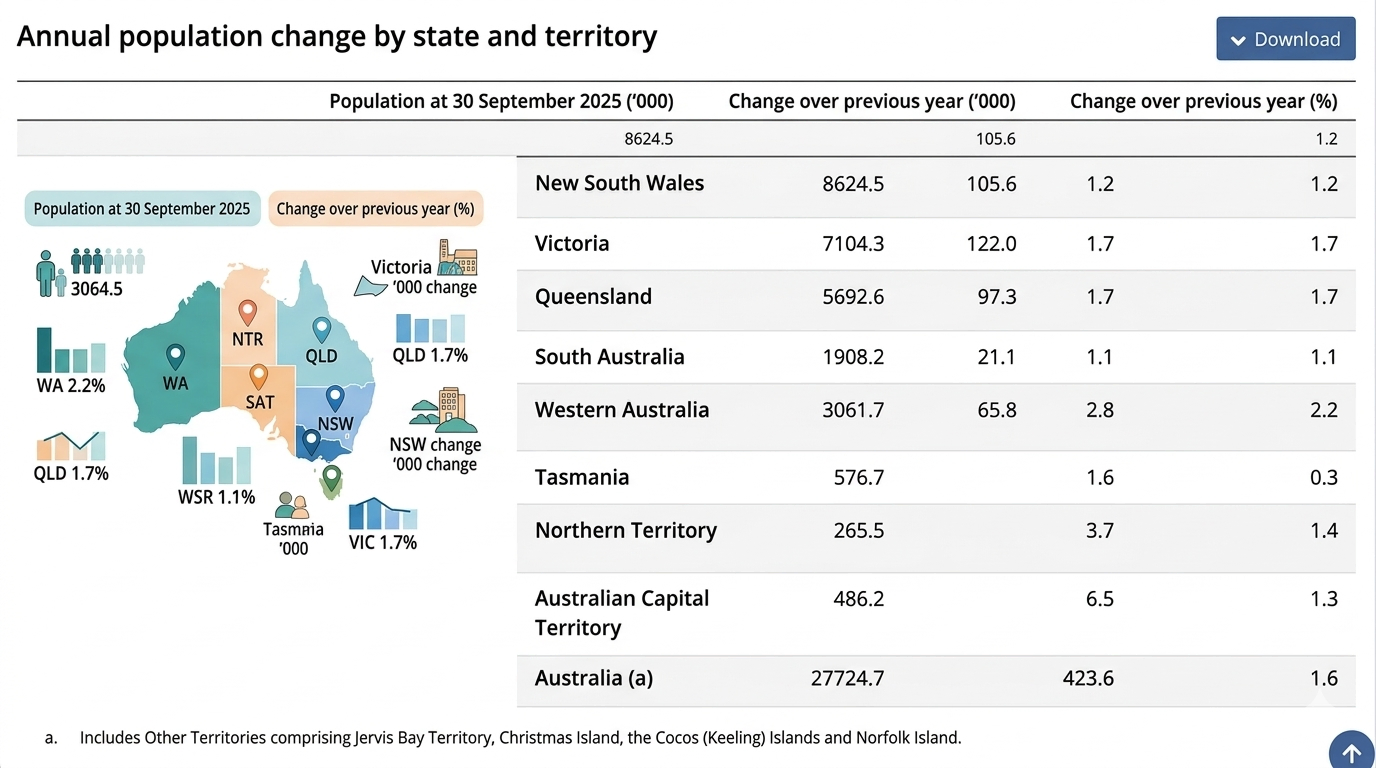
Phil Browning, the ABS head of demography, noted today that the country added 423,600 residents over the year.
The growth was fuelled by two primary engines: natural increase and net overseas migration.
The natural increase—calculated as births minus deaths—contributed 112,600 people to the total.
The sector saw a 1.9% rise in births, while deaths fell by 1.4 per cent, suggesting a robust demographic baseline.
However, the heavy lifting was done by net overseas migration, which accounted for 311,000 new residents as international travel and settlement patterns stabilised.
Western Australia retained its title as the nation’s fastest-growing jurisdiction, recording a 2.2% rise in population as its economy continues to attract interstate and international arrivals.
Victoria and Queensland followed closely, both posting a solid 1.7% growth rate.
In contrast, Tasmania recorded the most modest gains, with its population increasing by just 0.3%.