

Aussie living costs rise as rate cuts ease pressure

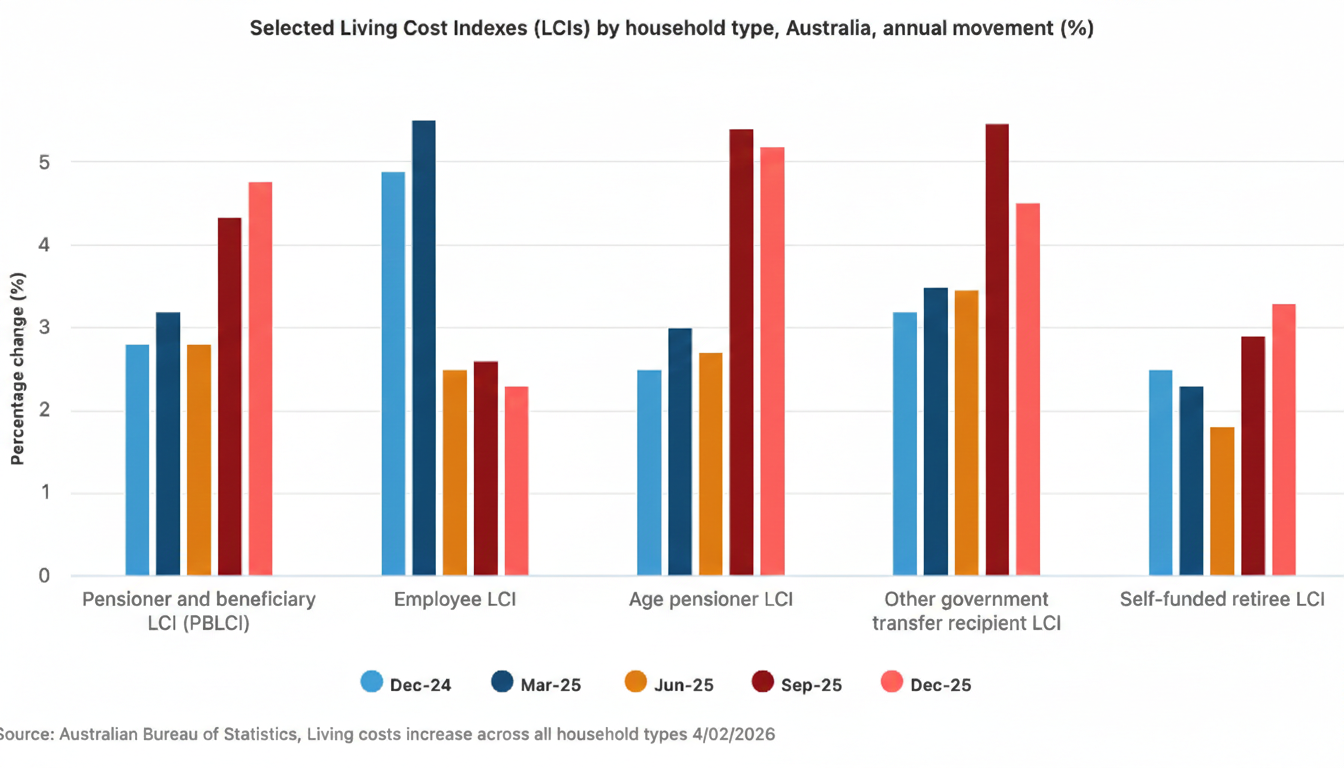
New data from the Australian Bureau of Statistics reveals a widening gap in the financial pressures facing Australian homes, with living costs rising across all household types in the year leading to the December 2025 quarter.
Annual increases ranged from 2.3% to 4.2%, driven primarily by surges in housing, food, and recreation.
Michelle Marquardt, ABS head of prices statistics, noted that households relying on government payments were hit hardest.
These families saw the steepest annual climb due to skyrocketing electricity costs, particularly as state-based energy rebates in Queensland and Western Australia were exhausted.
Conversely, employee households recorded the lowest annual increase at 2.3%, largely shielded by a cooling housing market.
"Mortgage interest charges fell 6.4% over the year as banks responded to the Reserve Bank of Australia's cash rate cuts in February, May, and August," Ms. Marquardt explained.
While annual figures remain high, the quarterly data offers a glimmer of relief. Living cost growth slowed across the board between September and December 2025, bolstered by the Commonwealth Energy Bill Relief Fund and significant drops in healthcare expenses.
A higher proportion of Australians reaching the Pharmaceutical Benefits Scheme safety net, combined with the expanded bulk billing incentive, reduced out-of-pocket medical costs for all demographics.