
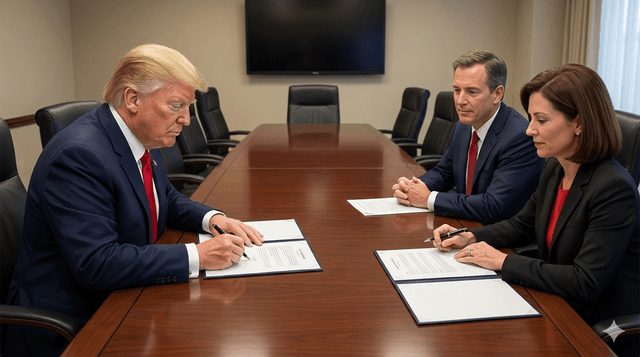

Johnson & Johnson (NYSE:JNJ) became the latest pharmaceutical titan to bow to White House pressure, announcing a voluntary agreement to lower prescription drug costs in exchange for an exemption from the administration’s aggressive new import tariffs.
The deal follows a template established by the Trump Administration over the last quarter, where major drugmakers trade domestic pricing concessions for supply-chain stability.
Under the terms, J&J will offer significant discounts on its pharmaceutical portfolio through TrumpRx.gov, a government-backed direct-to-consumer portal slated to launch this month.
The company also committed to "Most-Favored-Nation" (MFN) pricing, ensuring that U.S. Medicaid programs pay no more than the lowest prices offered in other wealthy, developed nations.
In return, the White House has granted J&J a three-year waiver from the 100% tariffs recently threatened on imported branded pharmaceuticals.
The exemption is a critical win for the New Brunswick-based company, which had previously warned that such duties could cost it hundreds of millions of dollars and trigger widespread medicine shortages.
To further align with the administration's "America First" agenda, J&J reaffirmed a massive $55 billion U.S. investment plan through 2029.
As part of this push, the company announced two new domestic manufacturing hubs: a next-generation cell therapy site in Pennsylvania and a state-of-the-art drug product facility in North Carolina.
These projects are intended to "reshore" production and reduce reliance on foreign active pharmaceutical ingredients (APIs).
The agreement effectively brings 15 of the 17 largest pharmaceutical companies into the administration's voluntary pricing fold.
Analysts suggest that by choosing negotiation over litigation, J&J and its peers are seeking to stave off more permanent, mandatory price controls while navigating a volatile global trade environment.